
Latika Bhardwaj
(Counsellor and Research Scholar)
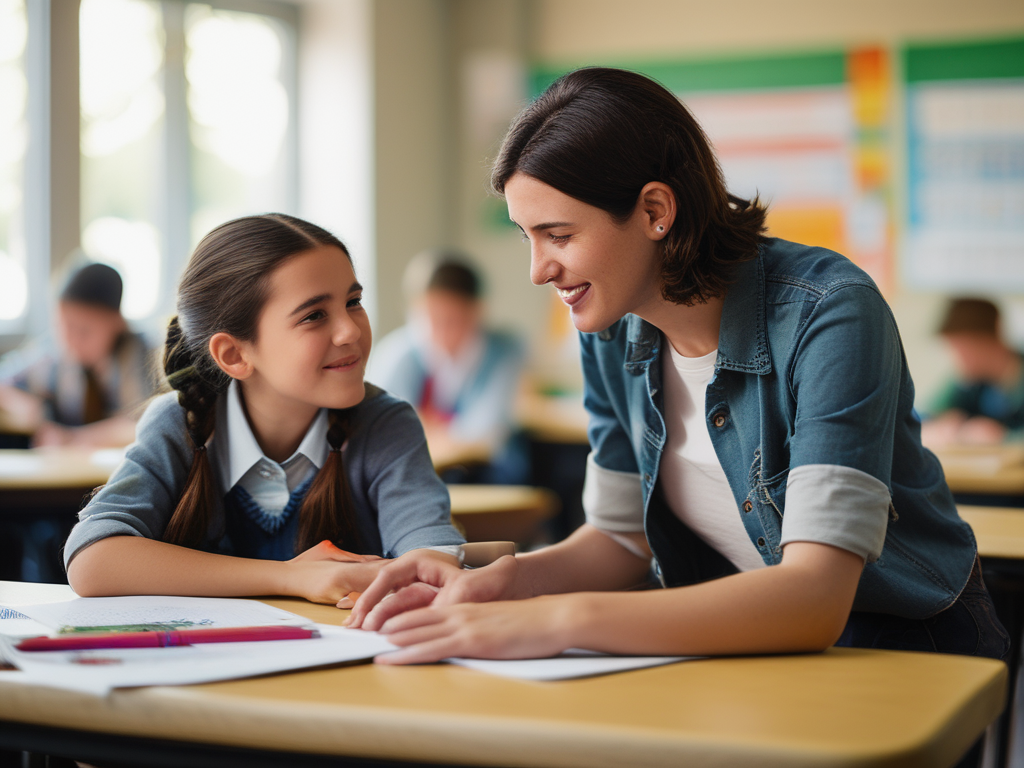
Interaction between teacher and student builds up the whole process of teaching and learning in an educational setting. Such interactions play a significant role in shaping of and for the all-round development of their personality which includes: social, behavioural, emotional, psycho-motor, mental, etc. along with the development of intellect/ intelligence i.e. academic aspect. Students spend most of the time with their teachers and peers after their parents that’s why classroom setting has a tremendous effect on their personality. Teacher’s personality also has a great influence on a student’s life. That’s why understanding of child psychology is as important for a teacher as teaching methods.

Child psychology is one of the branches of Psychology that deals with the mind and behavioural patterns of a child and focuses on the development of mental, emotional, social and physical aspect also. It helps in better understanding of a child, the way (s)he thinks, behaves or acts in any situation, to know and understand the interests, abilities, attitudes, aptitudes, etc. of a child. Child psychology can help parents in improving their parenting styles, their behaviour towards their children and improving home environment that benefits their development. In the same way, child psychology holds importance in a teacher’s life as well. That’s why it is very important for every teacher to learn and understand child psychology and how it can be implemented in the classroom setting.
Children perceive and understand differently, they also learn at different pace, they have different learning styles which may vary from child to child. According to the Cognitive Development Theory of Jean Piaget a child’s development is different at every stage of life and this should be taken in to consideration while teaching, making lesson plans, preparing activities, etc. Children are good at observing and imitating elders especially teachers because they are like role models for children which was also first talked in the Bandura’s Social Learning Theory. He talked about how child ends up modelling whatever (s)he sees in the home environment and classroom setting and tries to copy his/ her parents or teachers which eventually becomes a part of personality.
A teacher should use compassionate interactions with students, try to maintain a positive classroom environment, there should be no judgement in the behaviour of a teacher as it will make students uncomfortable, don’t shame them for being wrong rather look for a constructive way to give feedback, no biasness and favouritism should be practiced to give an open environment to students so that they can perform according to their respective capabilities, use of audio- visual aids can help teachers to indulge students in using their senses while learning. It helps in forming teaching-learning process as interactive, active and innovative. A child-centred pedagogy and classroom activities will help in increasing attention span, academic performance, increasing the effectiveness of a teaching-learning process and efficiency of a teacher, improving teaching styles, classroom management and making learning more lively, beneficial and active for students. Teachers must observe the students, listen to them attentively, identify their problems and help them accordingly. Appreciate them for their efforts and use reinforcements appropriately when required.
Students’ grades and behaviour is one of the parameters to measure the effectiveness and efficiency of a teacher which makes it very evident if a teacher is doing a good job or not. So, understanding child psychology is important for a teacher to help child nurture and for an over-all development of the personality. As a child may get influenced by the personality of a teacher so, (s)he should also be wary of how one behaves in front of students. Child psychology is very closely related to the profession of teaching and not only helps a child in the proper personality development but also helps a teacher in improving their skills and increasing their effectiveness and efficiency.


 The Life Navigator