

The Secret Theater of Sleep: Why Your Brain Throws a Nightly Movie Premiere 🎬
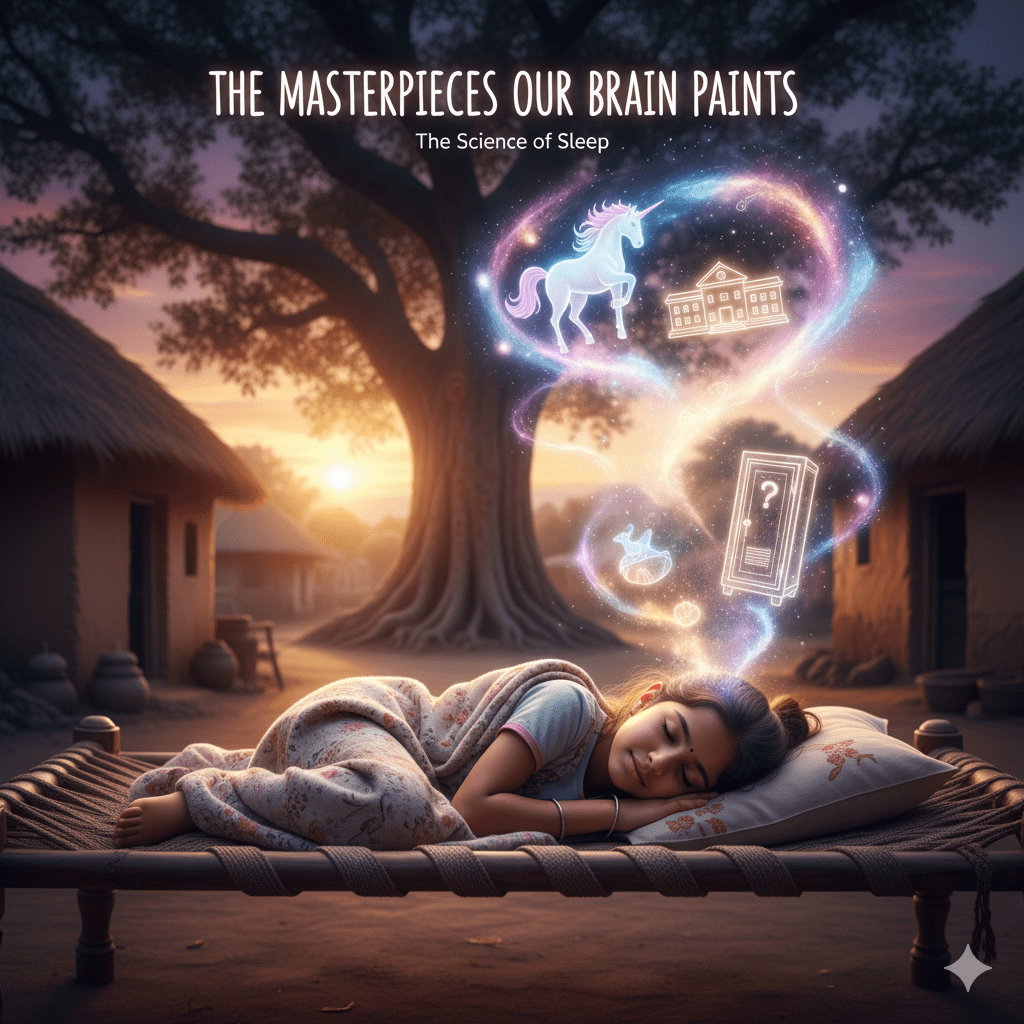
Have you ever woken up from a dream where you were flying over the school, talking to a unicorn, or suddenly forgot how to use your locker combination? Dreams are one of life’s most fascinating and bizarre mysteries! They aren’t just random static; they’re the masterpieces our brain paints every single night. 🎨
So, why do we dream? Let’s dive into the amazing science of sleep and uncover the purpose of your brain’s nightly show.
🌙 The Sleep Cycle: A Journey to the Dream Stage
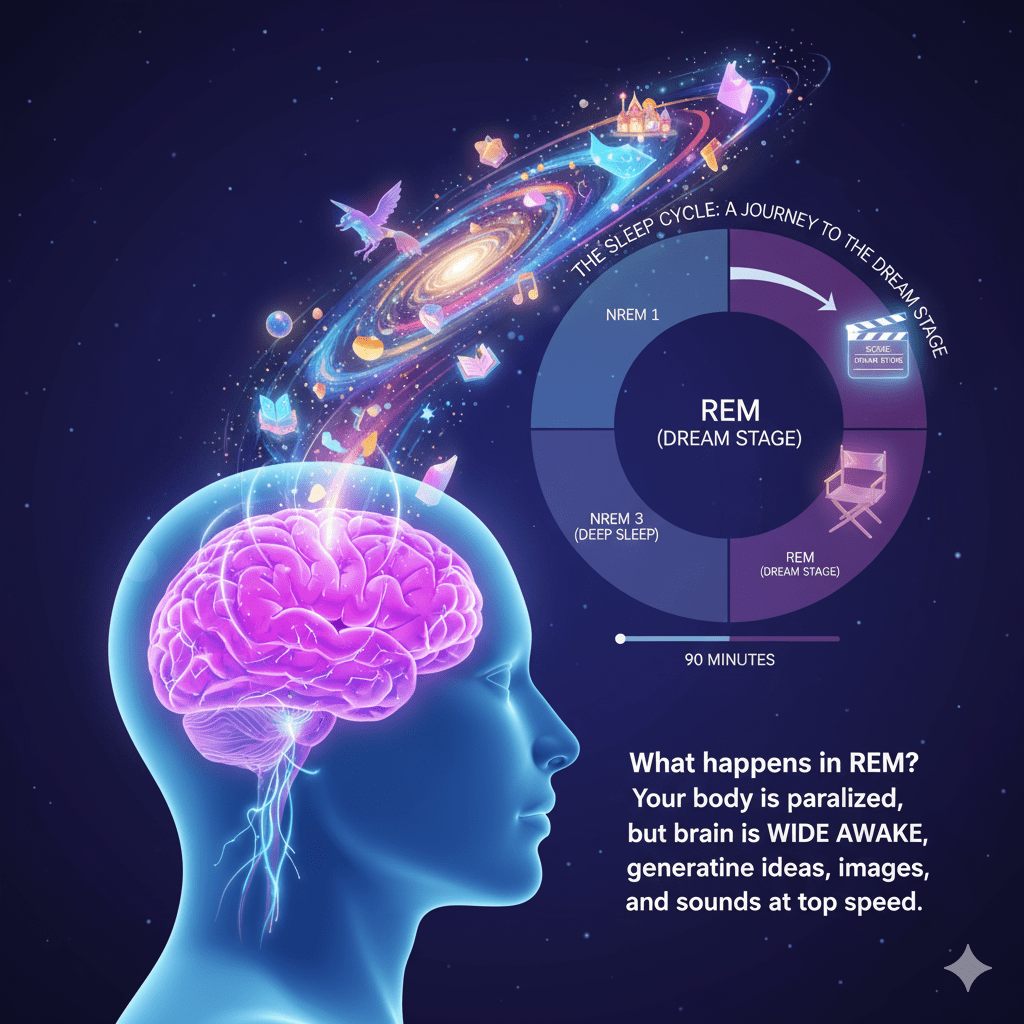
Sleep isn’t just one big block of rest—it’s a structured journey that cycles through four different acts. The most important act for dreaming is called REM (Rapid Eye Movement) sleep.
- What happens in REM? This stage usually hits about 90 minutes after you fall asleep. Your body is totally paralyzed and relaxed (scientists think this is to keep you from acting out your wild dreams!), but your brain’s electrical activity looks almost exactly like it does when you’re wide awake. Your brain is generating ideas, images, and sounds at top speed. It’s like your personal, 24/7 movie studio!
🧠 Theory 1: The Brain’s Nightly Filing Cabinet
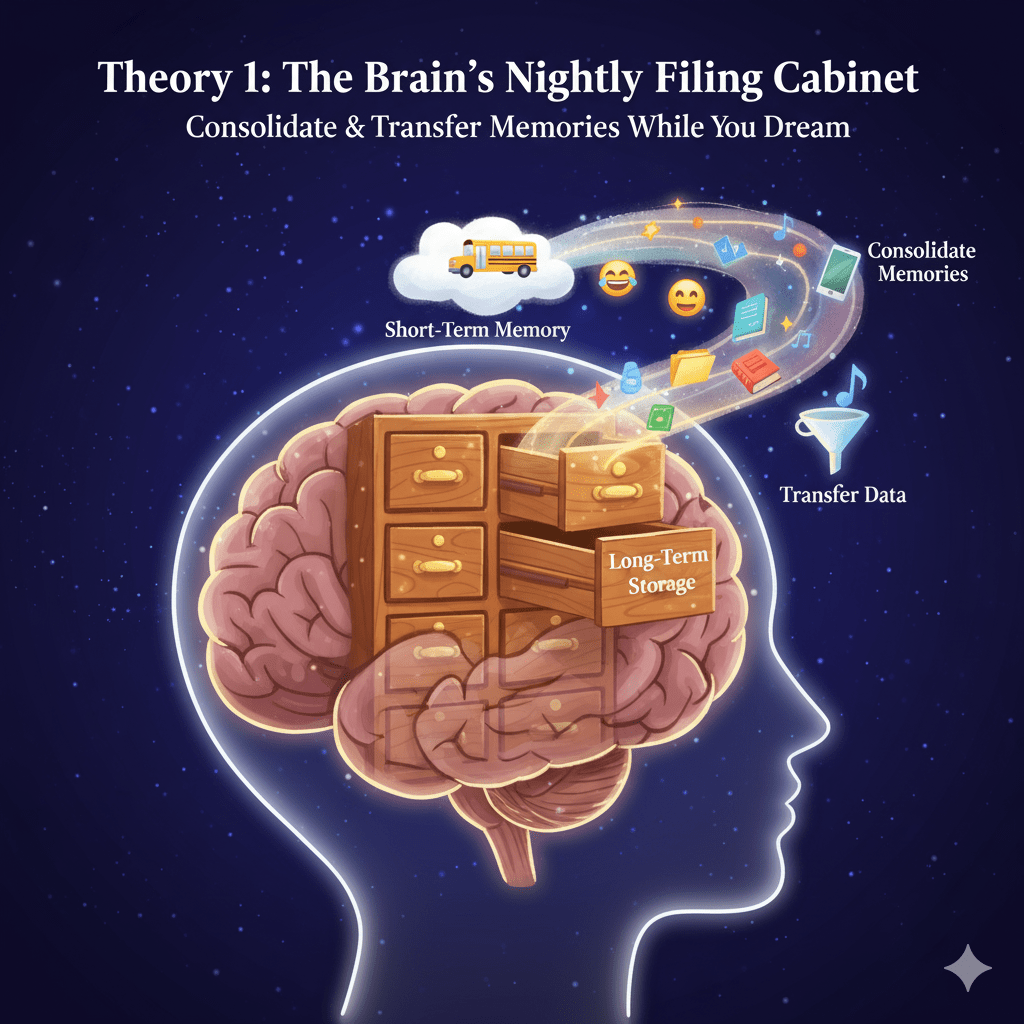
One of the most popular ideas is that dreams are the way your brain cleans house and organizes its data. Think of your brain like a giant, messy filing cabinet at the end of a busy day.
The dream state helps you:
- Consolidate Memories: During the day, you collect millions of sensory details—what your teacher said, the sound of the traffic, a funny meme you saw. Your dreaming brain acts as a filter, deciding what bits of information to keep (like that new math formula 🧮) and what to toss out.
- Transfer Data: Dreams are thought to move important short-term memories into long-term storage, essentially saving them to your mental hard drive. If you study hard before bed, you’re literally helping your brain file that information while you dream! 📚
🎭 Theory 2: The Emotional Rollercoaster Practice
Have you ever had a dream about losing something important or being totally unprepared for a test? Dreams are often intense and emotional because they act as a safe “emotional spa” for your brain.
Your brain uses dreams to process tough, complicated feelings from your waking life without the real-world consequences. This process is called Emotional Regulation.
By replaying events or mixing up emotions in the safety of a dream, you wake up feeling more balanced and calm. It’s like stress-testing your emotional armor before a big day! So, the next time you have a weirdly intense dream, know that your brain is just being an excellent therapist. 💖

✨ Theory 3: The Creative Incubator
Many artists, writers, and scientists credit their biggest breakthroughs to ideas they had in a dream. Why?
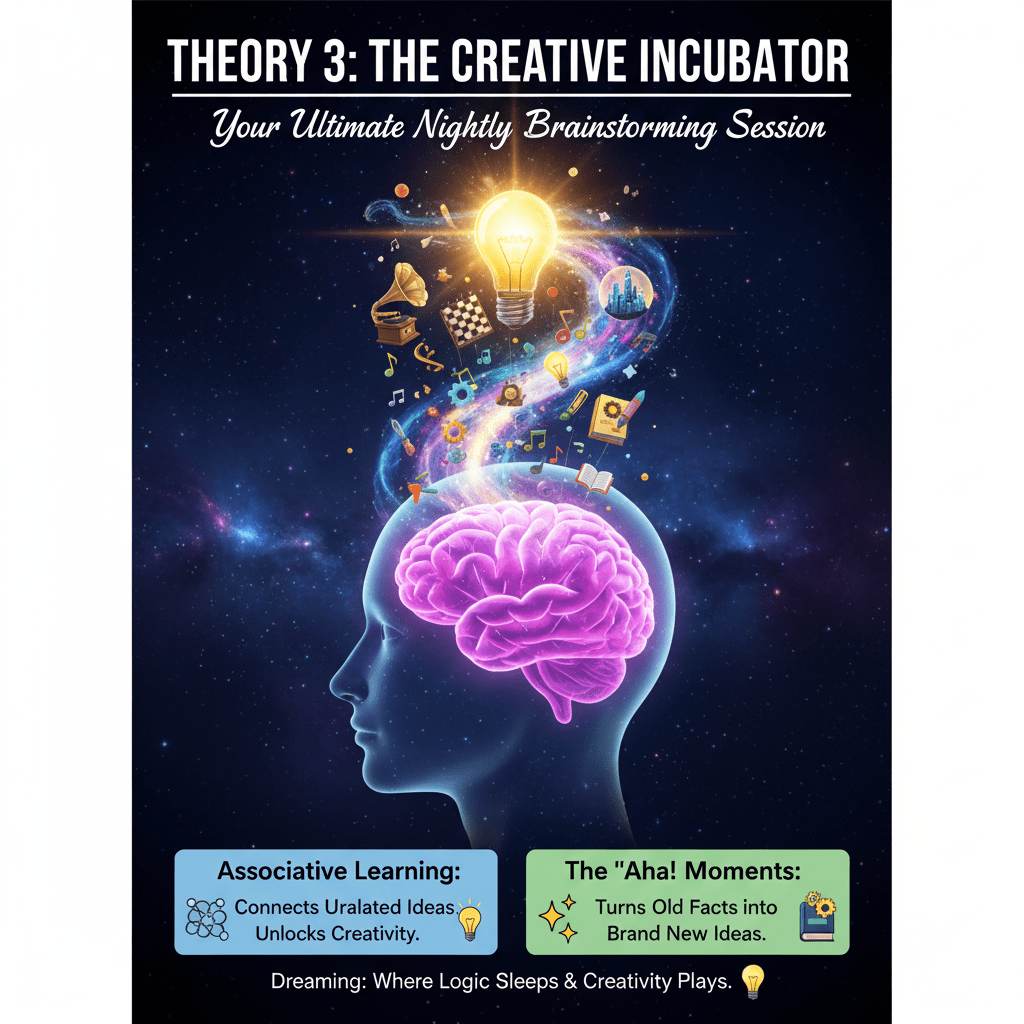
Dreams often connect totally unrelated concepts and memories in ways your conscious, logical brain never would. This is called associative learning, and it’s a massive boost for creativity. When your logical guard is down, your mind can play and experiment, leading to those “Aha!” moments. 💡
In this sense, dreaming is the ultimate brainstorming session, turning old facts into brand new ideas.
The Takeaway: Appreciate the Show!
Dreaming is essential work. It helps you remember, process, and create. It’s not just a funny show your head puts on; it’s a key function that helps you grow and stay mentally healthy.
So, the next time you wake up from a spectacular adventure, take a moment to appreciate the powerful, hardworking genius that is your dreaming brain! ✨


 The Life Navigator