The Quest for Immortality: Can We Live Forever? ⏳✨
Since the dawn of time, humans have dreamed of the Elixir of Life or the Fountain of Youth. But what if the secret to immortality isn’t a magical potion, but a tiny, microscopic flaw hidden inside every single one of our cells?
The short answer to the question “Can we live forever?” is: Not yet. But scientists are actively trying to rewrite the rules of aging! Let’s explore the three main reasons why our bodies have a built-in expiration date.

🧬 Problem 1: The Case of the Shortening Shoelaces (Telomeres)
Imagine your chromosomes, which hold your DNA blueprint, are like shoelaces. To keep the DNA from fraying and unraveling, the ends are capped with protective tips called Telomeres .
- The Biological Clock: Every time one of your cells divides (which happens constantly to heal wounds, grow hair, and replace worn-out tissues), these telomeres get a little shorter. It’s like a tiny chunk of the shoelace tip is snipped off.
- The Deadline: Eventually, the telomere gets so short that the cell senses danger. It realizes its DNA is no longer protected, so it triggers a shutdown. This is called replicative senescence—the cell just stops dividing and retires.
- The Result: When enough cells in an organ (like your skin or heart) hit this retirement age, the organ loses its ability to repair itself, leading to the physical decline we call aging (wrinkles, weaker muscles, etc.).

🧪 Problem 2: The Toxic Fog of Free Radicals
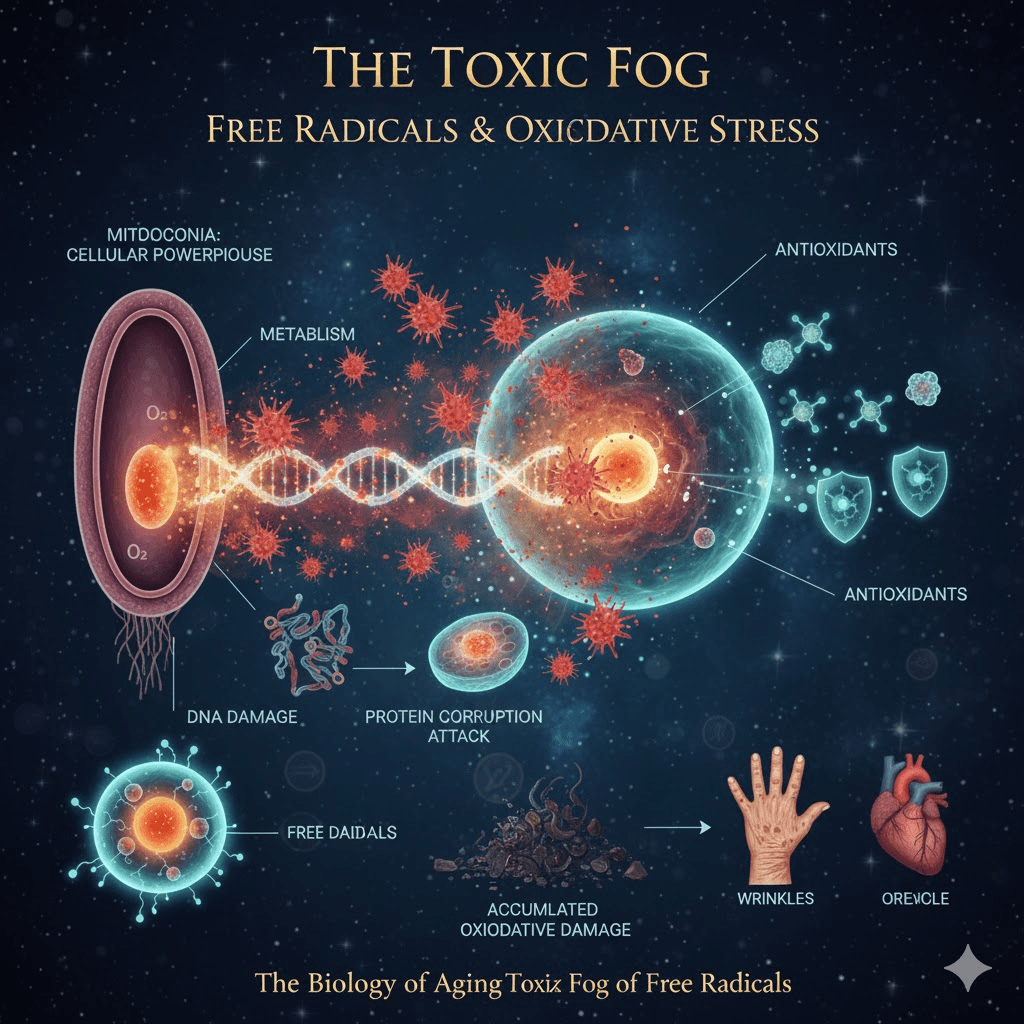
You breathe every second of the day, which is great for life, but it also creates a major aging problem!
Your cells use oxygen to convert food into energy in tiny powerhouses called mitochondria. This process, known as metabolism, is essential, but it creates unstable byproducts called Free Radicals.
- What are Free Radicals? They are highly reactive molecules that zip around the cell, desperate to steal electrons from stable molecules like DNA, proteins, and cell membranes. This is like having tiny, destructive wrecking balls smashing into the delicate machinery of your cells.
- The Accumulation: Over decades, this constant oxidative damage piles up. Our bodies have internal superheroes called antioxidants to neutralize these radicals, but they can’t catch them all. The accumulated damage messes up the cell’s function, accelerating aging and leading to age-related diseases.
🧱 Problem 3: The Build-up of “Zombie” Cells (Senescence)
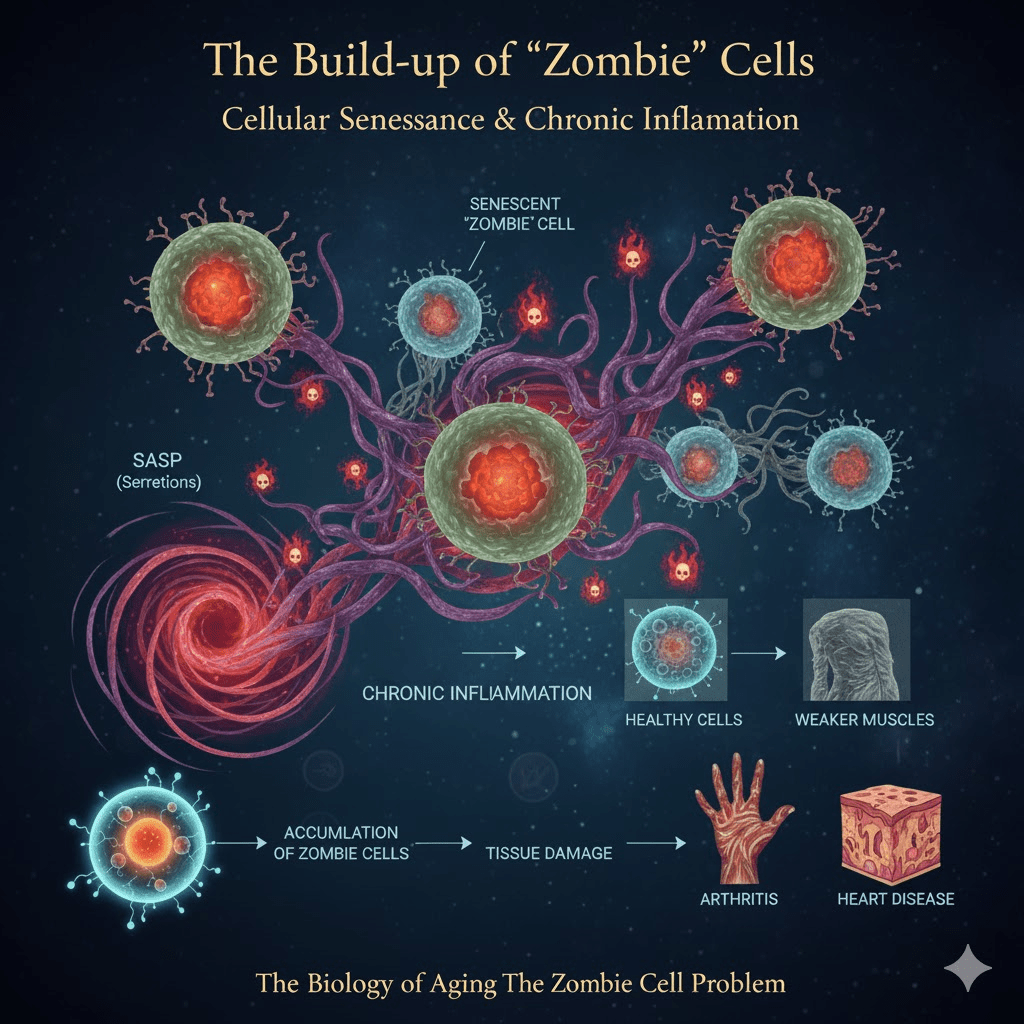
Remember those cells in Problem 1 that stopped dividing? They don’t just quietly vanish. They become senescent cells, sometimes called “zombie cells.” 🧟♀️
- The Damage: They don’t die, but they don’t do their job anymore. Worse, they start secreting harmful, inflammatory chemicals (a process called SASP) that poison the healthy cells around them.
- Chronic Inflammation: The more zombie cells you have, the more inflammation spreads through your tissues and organs. This chronic inflammation is a major driver of nearly every age-related disease, from arthritis to heart disease.
🚀 The Search for Solutions: Can We Hack the Clock?
Today, research is focused on targeting these three problems to extend not just the lifespan (how long we live), but the healthspan (how long we live healthily).
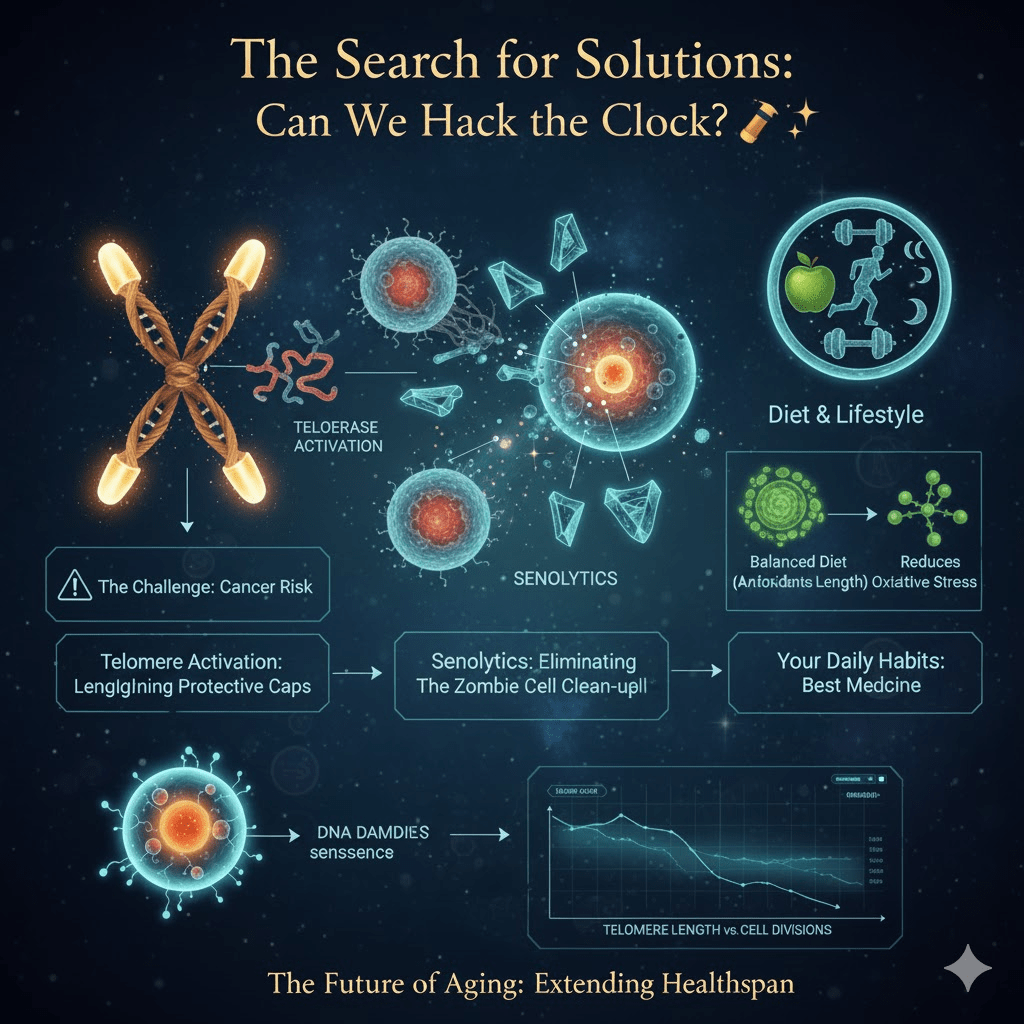
- Telomere Activation: Scientists are studying ways to safely reactivate the enzyme telomerase—the “immortality enzyme” used by stem cells and cancer cells—to lengthen telomeres and keep cells dividing longer. (The trick is to do this without causing cancer!)
- Senolytics: This is perhaps the most exciting area! Senolytics are drugs designed specifically to find and destroy those harmful “zombie” cells. Early studies in mice showed that clearing senescent cells can dramatically reduce signs of aging and extend healthy life.
- Diet and Lifestyle: Your daily habits are still the best medicine! Studies show that things like regular exercise, a balanced diet (rich in antioxidants!), and sufficient sleep all help maintain telomere length and reduce oxidative stress. 🍎🏃♀️
While true biological immortality remains the stuff of science fiction, the scientific quest to defeat disease and radically extend our health is well underway. For now, the best strategy is to take excellent care of the brilliant, complex machine you already have!


 The Life Navigator