
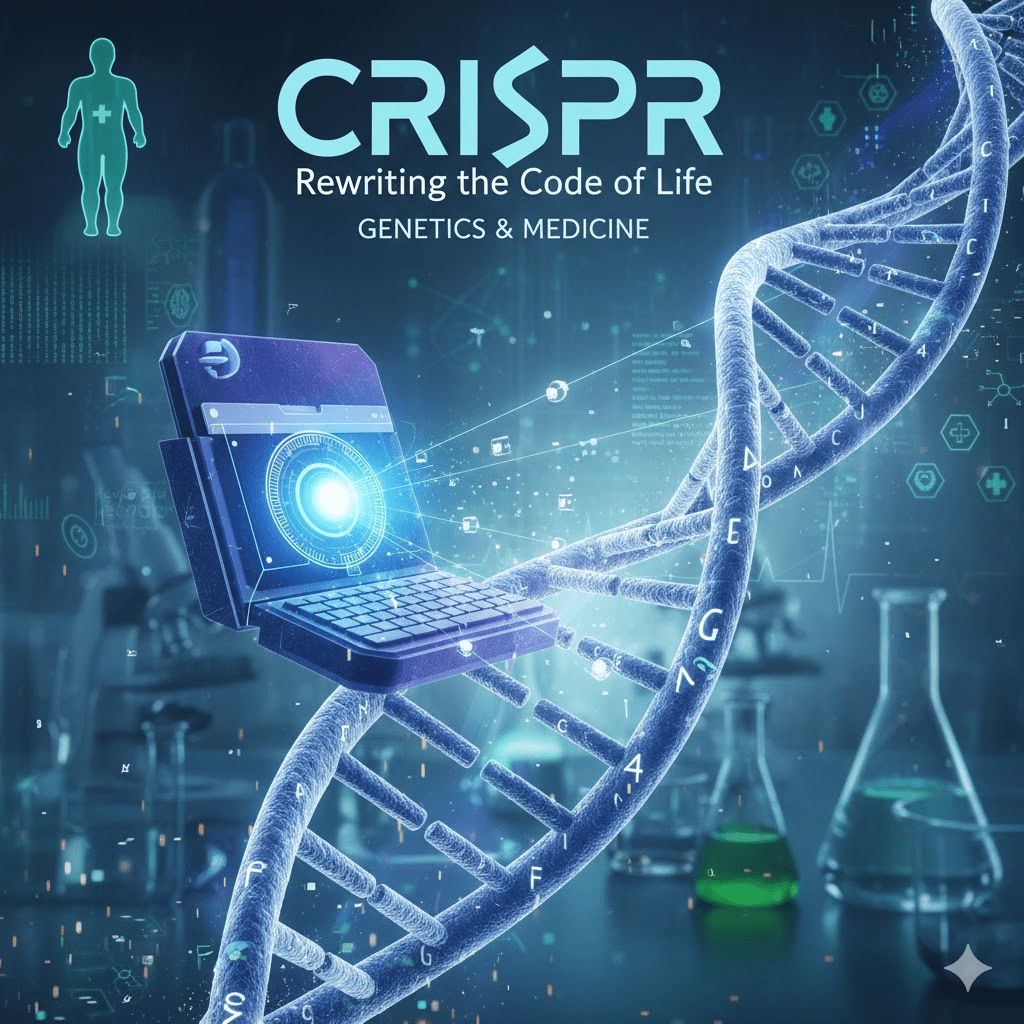
For college students immersed in the world of biology and medicine, no technology is more revolutionary right now than CRISPR. This system has fundamentally changed how we study genetics and is on the brink of transforming medicine by offering the ability to edit the human genome with unprecedented precision, speed, and affordability.1 Think of it as a powerful, high-tech molecular word processor for DNA.
🔬 What is CRISPR-Cas9? The Molecular Scissor2
CRISPR, which stands for Clustered Regularly Interspaced Short Palindromic Repeats, is not a synthetic invention—it’s actually a natural defense system found in bacteria.3
How Bacteria Fight Viruses
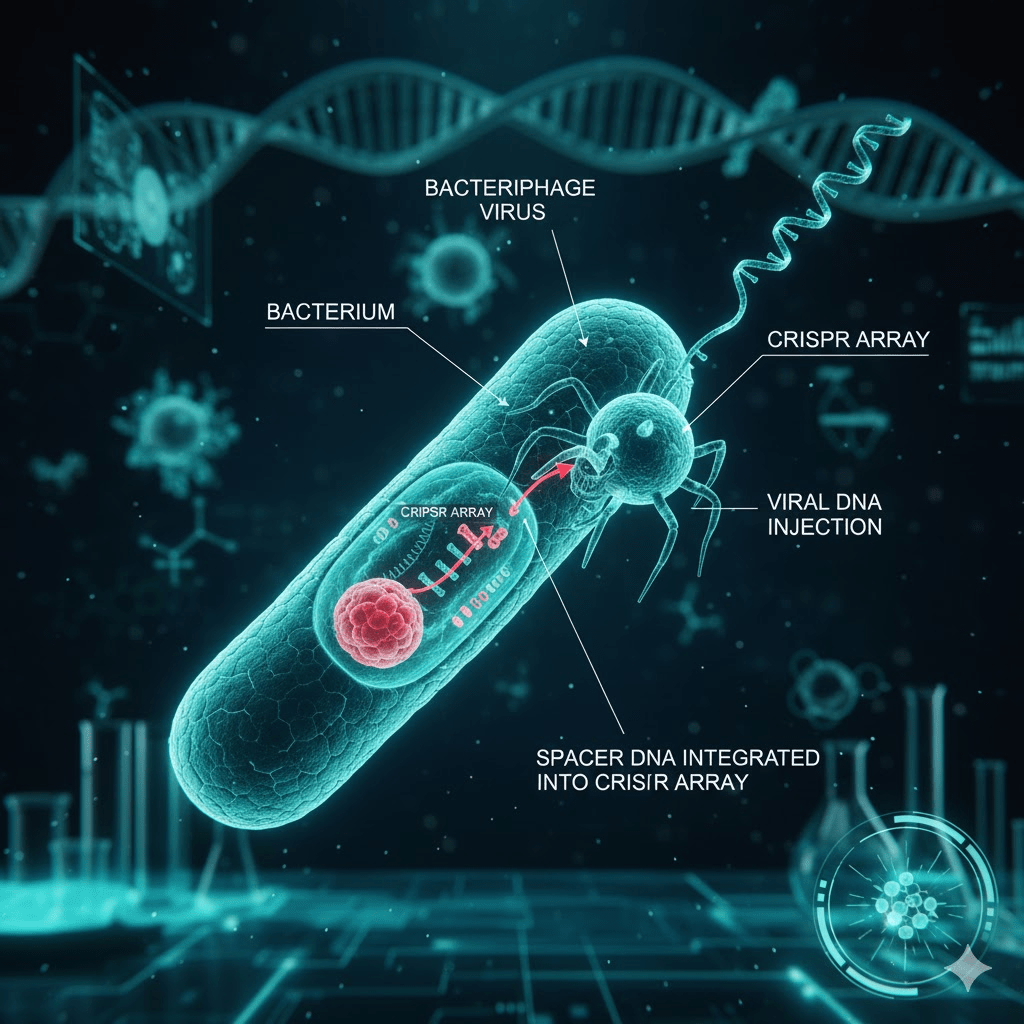
Bacteria use this system as an adaptive immune response against invading viruses (bacteriophages).4 When a virus attacks, the bacteria capture a small snippet of the viral DNA and store it in their own genome in a special section called the CRISPR array.5 This stored DNA acts as a genetic memory.

If the same virus attacks again, the bacteria quickly create an RNA copy (called a guide RNA, or gRNA) from that stored viral snippet.6 The gRNA then teams up with an enzyme, most commonly Cas9 (CRISPR-associated protein 9), which acts as the “molecular scissors.”7 The gRNA guides the Cas9 enzyme precisely to the viral DNA sequence, and Cas9 cuts the DNA, destroying the virus
.
The Scientific Leap
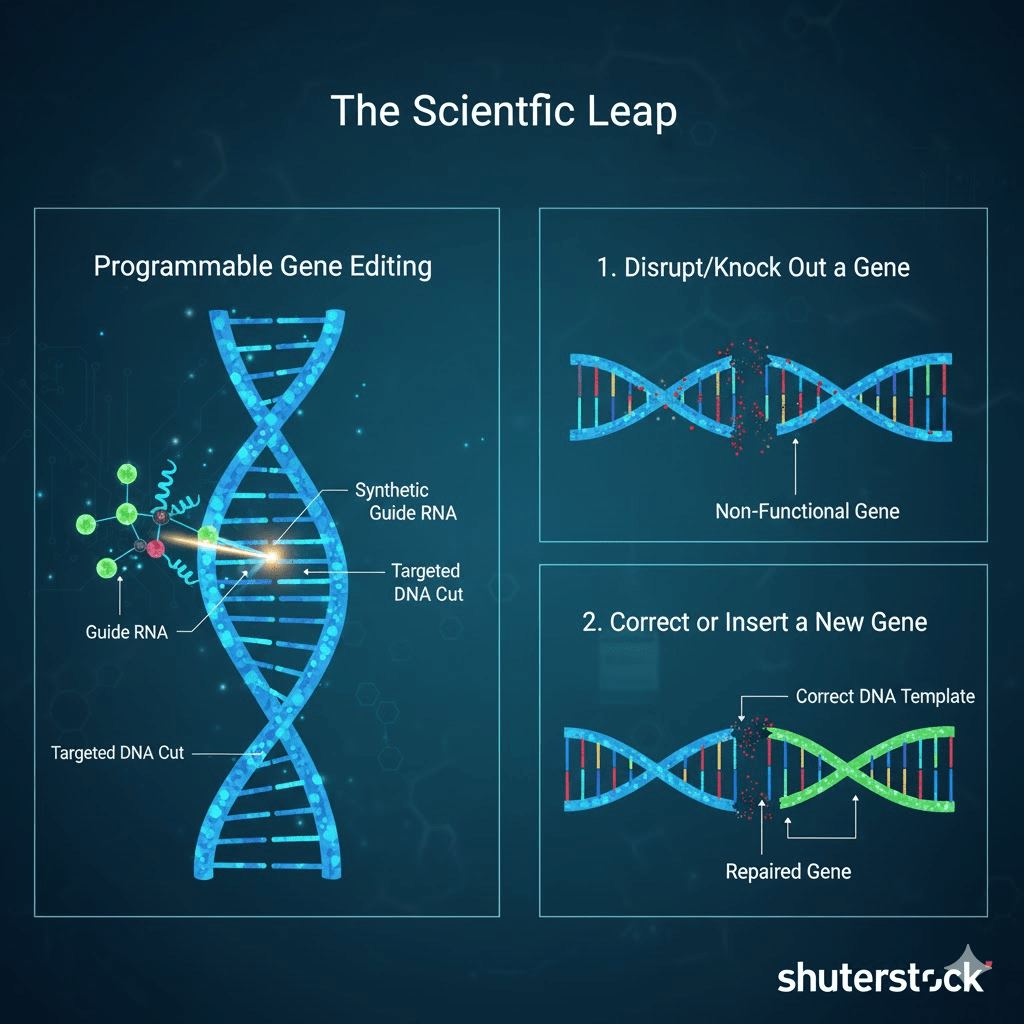
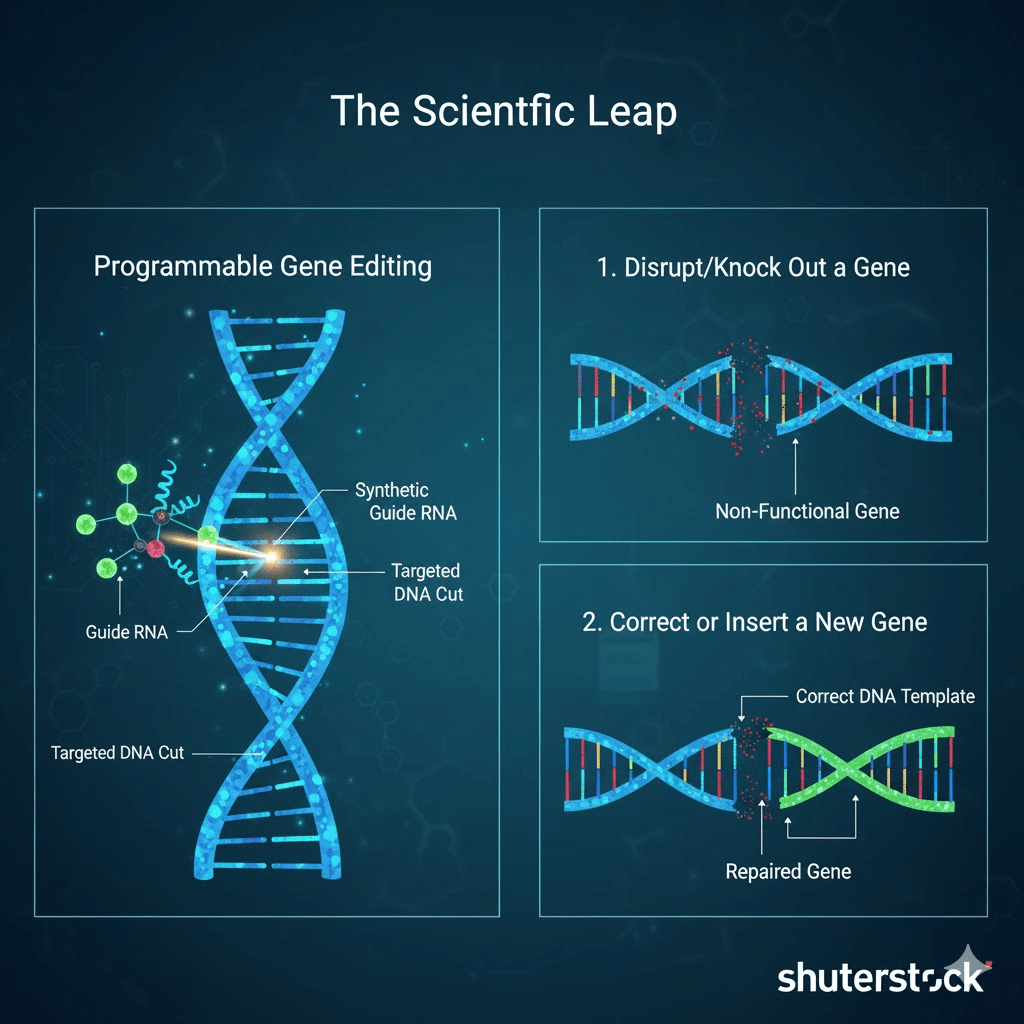
Scientists realized they could program this system. By simply creating a synthetic guide RNA that matches any DNA sequence in any organism, they could direct the Cas9 enzyme to cut the DNA at that exact location.9 Once the DNA is cut, the cell’s natural repair mechanisms kick in, allowing scientists to:
- Disrupt/Knock Out a Gene: The cell attempts to fix the break, often introducing small errors (insertions or deletions, called indels) that effectively switch the gene off.10
- Correct or Insert a New Gene: By supplying a correct DNA template, the cell can use a more precise repair pathway (Homology-Directed Repair, or HDR) to rewrite the cut section.11
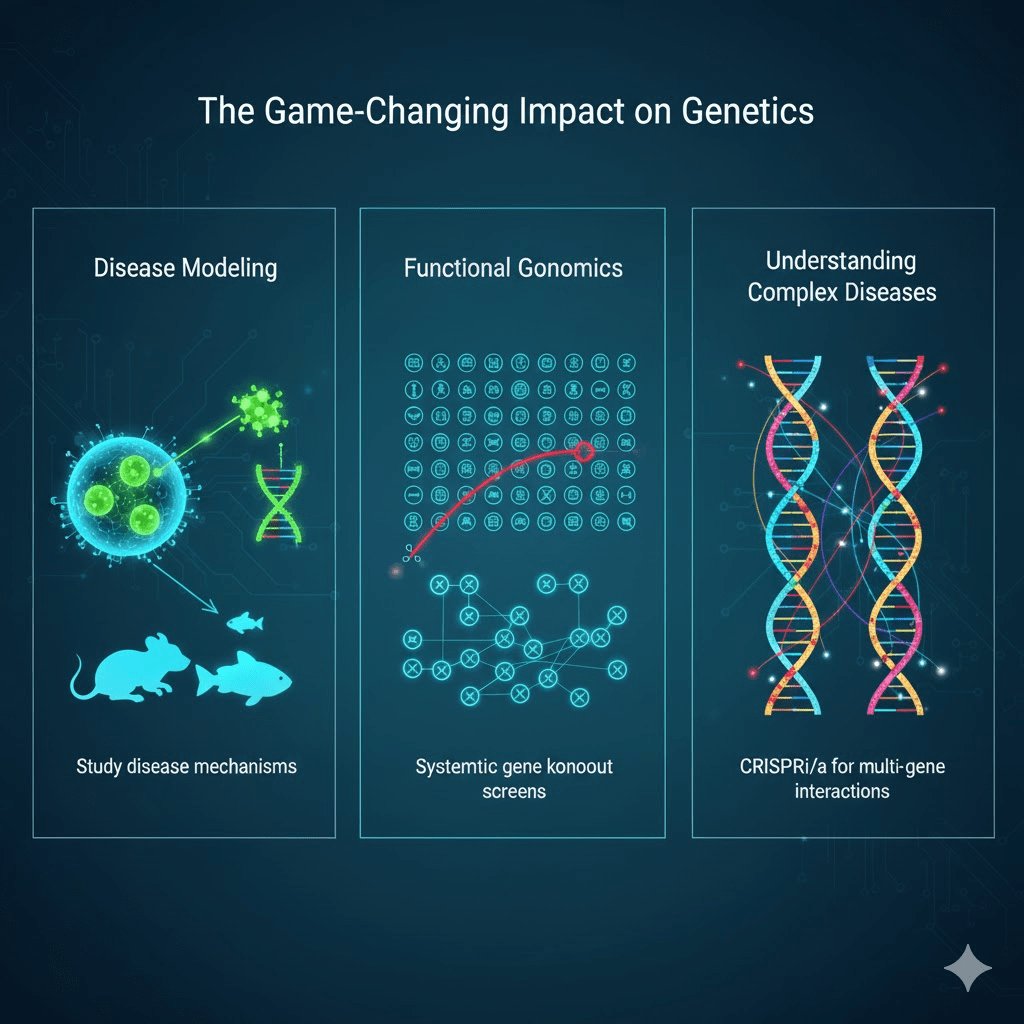
🛠️ The Game-Changing Impact on Genetics
CRISPR has turbocharged the field of genetics, making research faster and more systematic than ever before.
- Disease Modeling: Researchers can now quickly and easily introduce specific disease-causing mutations into cell lines (like induced pluripotent stem cells, iPSCs) or model organisms (like mice and zebrafish).12 This allows them to study the exact mechanism of a disease, accelerating the search for drug targets.13
- Functional Genomics: Scientists can use CRISPR screens to systematically turn off every single gene in a cell’s genome to figure out what each gene does. This is critical for mapping out complex biological pathways.14
- Understanding Complex Diseases: For diseases like heart disease or cancer, which are influenced by multiple genes, CRISPR allows for the precise study of how different genetic changes interact.
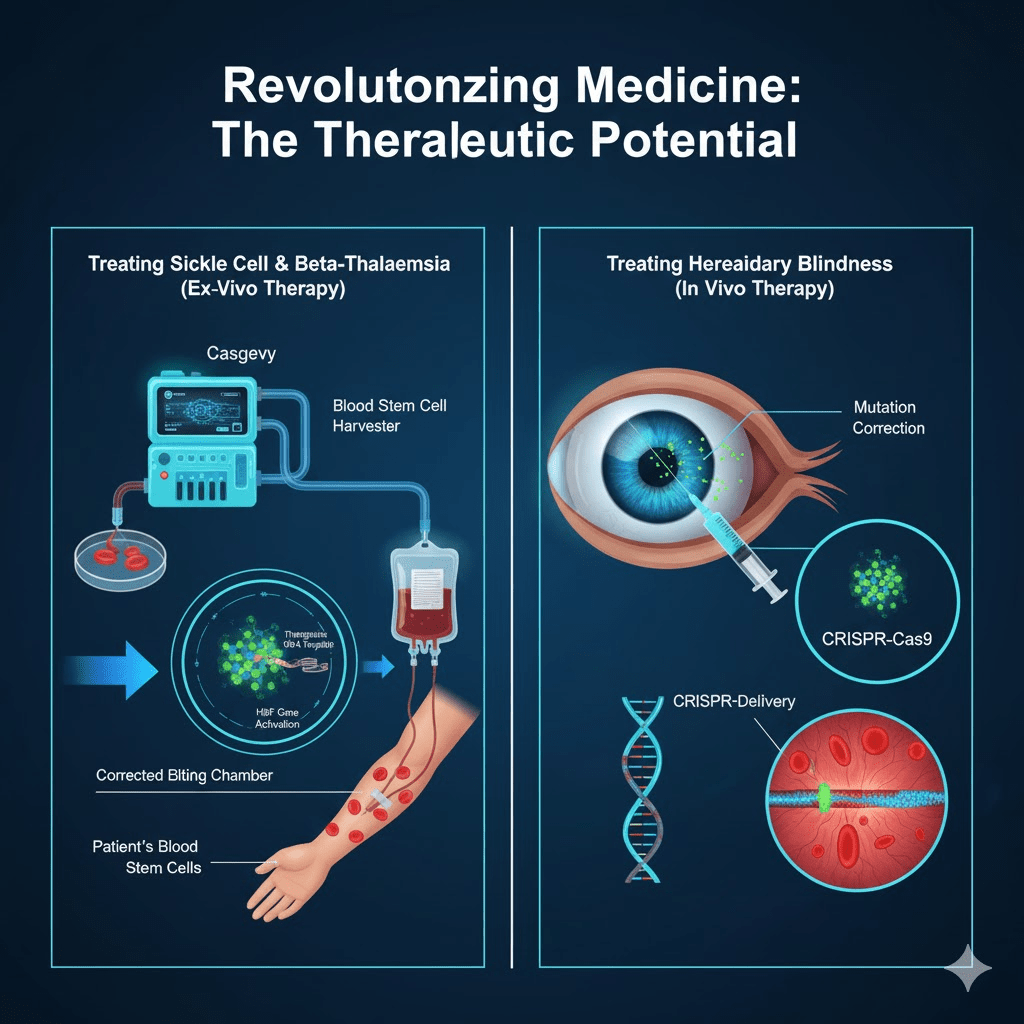
🏥 Revolutionizing Medicine: The Therapeutic Potential
The true excitement lies in medicine, where CRISPR offers the potential to provide cures, not just treatments, for diseases rooted in genetics.15
Treating Genetic Disorders
CRISPR is moving rapidly through clinical trials for monogenic (single-gene) diseases:16
- Sickle Cell Disease (SCD) and Beta-Thalassemia: These are blood disorders caused by mutations in hemoglobin genes.17 The first FDA-approved CRISPR therapy, Casgevy, works by editing the patient’s own blood stem cells outside the body (ex vivo) to turn on the production of a healthy form of hemoglobin (fetal hemoglobin), effectively curing the disease in many patients.18
- Hereditary Blindness (Leber Congenital Amaurosis): In this case, the CRISPR components are delivered directly into the body (in vivo), targeting the cells in the eye to correct the mutation causing blindness.19
Battling Cancer and Infectious Diseases
- Advanced Cancer Therapies: CRISPR is being used to engineer a patient’s immune cells (T-cells) ex vivo, making them more effective at finding and destroying cancer cells.20 This is a powerful step forward for therapies like CAR T-cell treatments.
- Fighting Viruses: Researchers have demonstrated CRISPR’s ability to literally cut out the DNA of persistent viruses, such as HIV, from infected cells.21

🛑 The Ethical and Technical Hurdles
Despite its amazing promise, the CRISPR revolution is not without its challenges:
- Off-Target Effects: Although precise, Cas9 can sometimes cut DNA at unintended locations, known as off-target effects.22 Improving precision is an ongoing area of research with newer versions like Base Editing and Prime Editing offering enhanced accuracy.23
- Delivery: Getting the CRISPR machinery to the exact target cells in the body remains a major technical challenge. Current methods use modified viruses or nanoparticles as delivery vehicles.24
- Ethical Concerns (Germline Editing): The most profound ethical debate surrounds germline editing—changes made to egg, sperm, or embryo cells that are heritable and would be passed down to future generations.25 Currently, there is a broad international consensus against human germline editing for clinical use due to profound safety and ethical implications.26

CRISPR is more than just a tool; it’s a paradigm shift in our relationship with the fundamental code of life. For college students entering the biomedical field, this technology will define your careers, driving innovation in personalized medicine and providing the blueprints for curing diseases that were previously untreatable.


 The Life Navigator