
When Tony Stark steps into his suit and takes to the skies, it’s an undeniable moment of cinematic cool. But for anyone with a curious mind, the question is inevitable: could we actually build a real-life Iron Man suit? The short answer is no, not with today’s technology. The long answer, however, is a fascinating journey through the cutting-edge of physics and engineering. Let’s break down the three key technologies that make Iron Man fly and see where reality stands.

1. The Heart of the Machine: The Arc Reactor
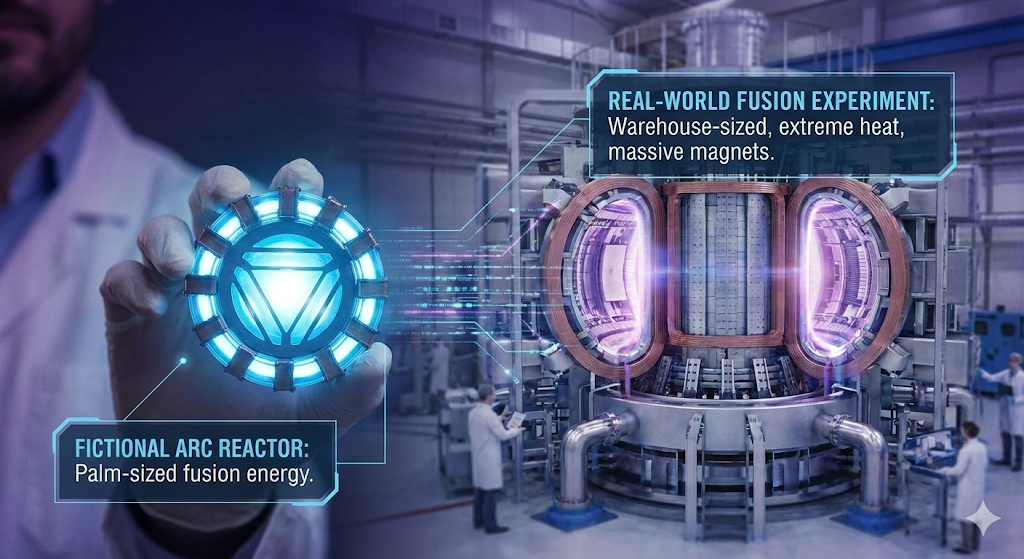
In the movies, the Arc Reactor is a palm-sized fusion reactor that generates clean, near-infinite energy to power the suit and keep Tony alive. It’s the holy grail of energy.
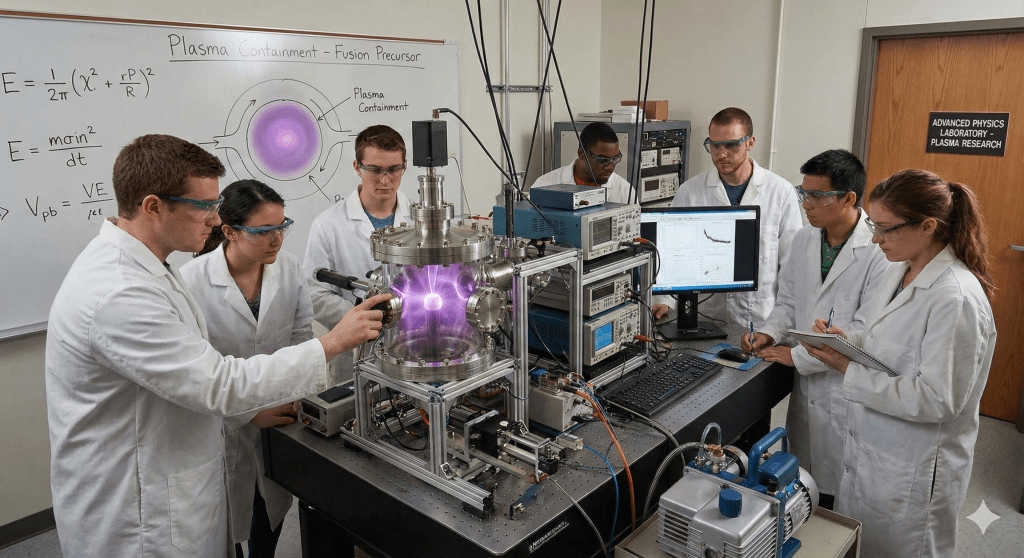
Real-World Science: Nuclear fusion is very real—it’s the same process that powers the sun. It involves smashing atoms together to release enormous amounts of energy. The problem is that this requires temperatures of millions of degrees and massive magnetic fields to contain the resulting plasma. Recreating these conditions on Earth currently requires building the size of a warehouse, not a hockey puck.
While projects like the MIT ARC reactor are working to create more compact fusion devices, they are still massive compared to Tony Stark’s invention. Furthermore, a real fusion reactor would generate an immense amount of waste heat. Without a magical cooling system, a chest-mounted reactor would instantly vaporize the user.
2. The Indestructible Armor: The Exoskeleton
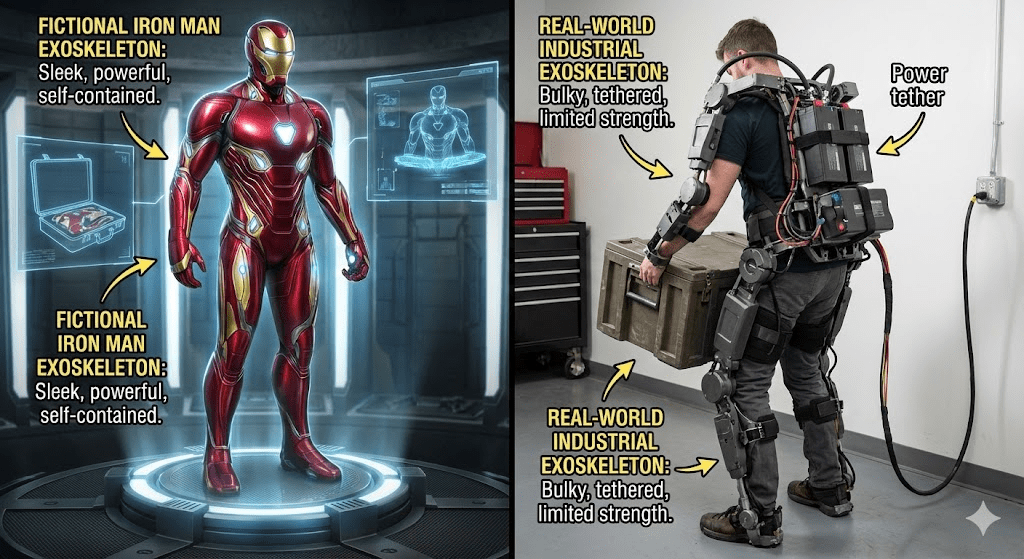
The Iron Man suit is a powered exoskeleton that grants superhuman strength and durability, all while being sleek enough to fit in a briefcase.
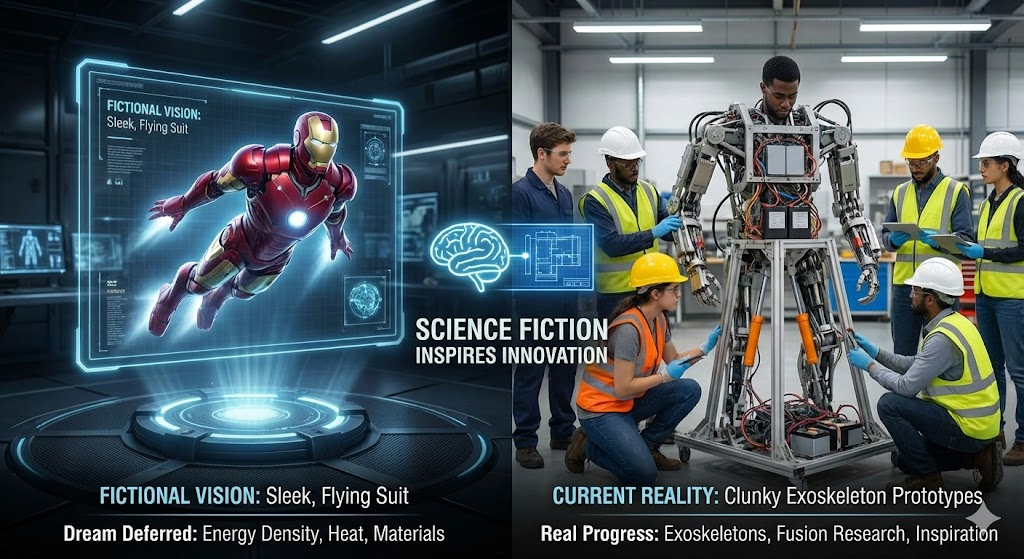
Real-World Science: This is the most realistic part of the suit. Powered exoskeletons are a real and growing field of technology. They are currently used in medical rehabilitation to help people with paralysis walk and in industrial settings to help workers lift heavy loads without injury.
However, real-world exoskeletons are far from the movie version. They are often bulky, slow, and require large, heavy batteries or a tethered power source. We currently lack the super-strong, lightweight materials (like the fictional “vibranium”) to create armor that can withstand a tank shell. Additionally, the actuators (motors) needed to provide Iron Man-level strength would be too large to fit inside a sleek suit.
3. Flight and Firepower: Repulsor Technology
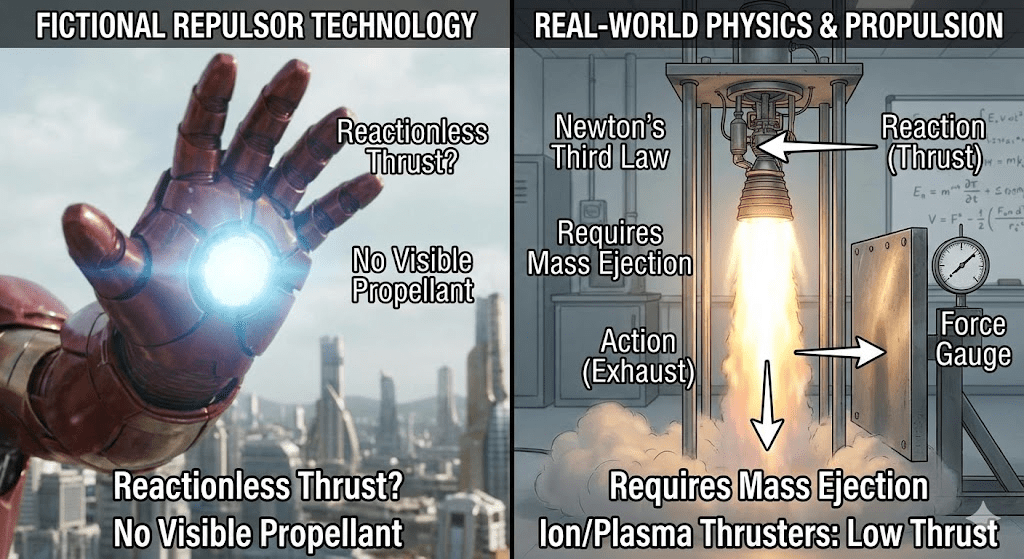
Iron Man’s repulsors are hand- and foot-mounted thrusters that allow for supersonic flight and fire powerful concussive blasts, all without any visible fuel source.
Real-World Science: This is where physics hits a brick wall. To fly, you need to generate thrust. According to Newton’s Third Law of Motion, for every action, there is an equal and opposite reaction. Jets push air backward to go forward; rockets push burning fuel. Iron Man’s repulsors seem to push… nothing.
Some theories suggest they could be a form of advanced ion thruster or plasma engine. While these technologies exist, they produce a tiny fraction of the thrust needed to lift a human being against gravity, let alone fly at supersonic speeds. A real device powerful enough to lift a person from their hands would require an astronomical amount of energy, bringing us back to the impossible Arc Reactor problem.
Conclusion: A Dream Deferred
So, is the Iron Man suit a pipe dream? For now, yes. The fundamental limits of energy density, heat management, and materials science stand in our way. We can build clunky exoskeletons, and we’re slowly making progress on fusion energy, but combining it all into a sleek, flying suit is currently impossible.
But that doesn’t mean we should stop dreaming. Science fiction has always inspired real-world innovation. Today’s students and engineers are the ones who will push the boundaries of what’s possible. Who knows? Maybe one day, a brilliant mind will crack thecode and make the impossible a reality.


 The Life Navigator