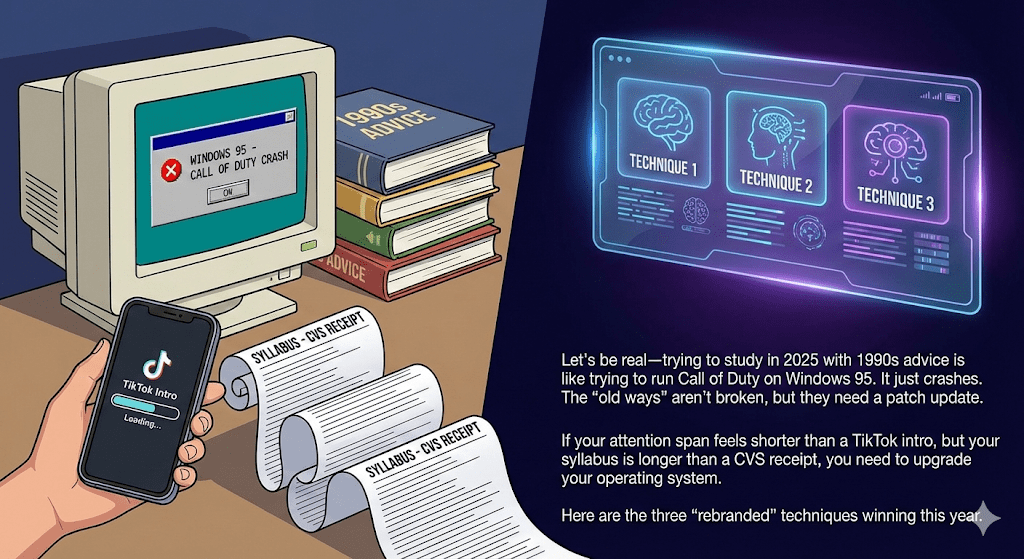
Let’s be real—trying to study in 2026 with 1990s advice is like trying to run Call of Duty on Windows 95. It just crashes.
The “old ways” aren’t broken, but they need a patch update. If your attention span feels shorter than a TikTok intro, but your syllabus is longer than a CVS receipt, you need to upgrade your operating system.
Here are the three “rebranded” techniques winning this year.
The Problem: The classic 25-minute Pomodoro is great for cleaning your room, but terrible for writing a thesis or coding. Just as you get into the “zone” (flow state), the timer dings and breaks your brain.
The 2026 Fix: The 50/10 Rule.
50 Minutes of Work: This is long enough to get past the “brain friction” and actually understand a complex concept.
10 Minutes of Rest: Not just scrolling! Stand up, stretch, or stare at a wall.
Why it works: It mimics the standard college lecture block but adds a mandatory reset button. You get fewer “start-up” costs and deeper focus.
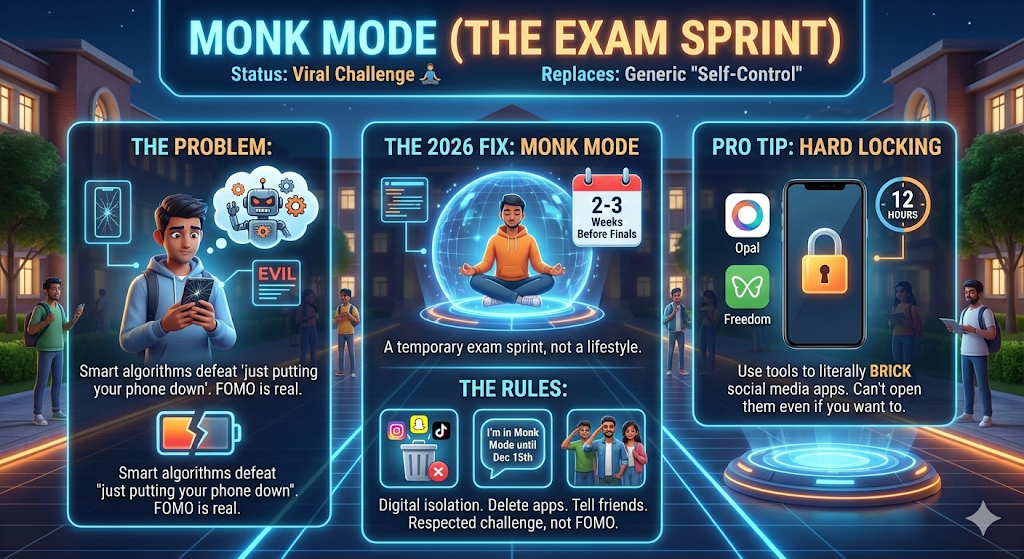
The Problem: “Just putting your phone down” doesn’t work when the algorithm is designed to be smarter than you.
The 2026 Fix:Monk Mode. This isn’t a lifestyle; it’s a temporary sprint. You enter Monk Mode specifically for 2–3 weeks before finals.
The Rules: Digital isolation. Delete Instagram/Snapchat/TikTok from your phone (not just hide them).
The Vibe: Tell your friends, “I’m in Monk Mode until Dec 15th.” It turns social isolation into a respected challenge rather than FOMO (Fear Of Missing Out).
Pro Tip: Use “hard” locking tools. Apps like Opal or Freedom can literally brick your social media apps for 12 hours a day so you can’t open them even if you want to.
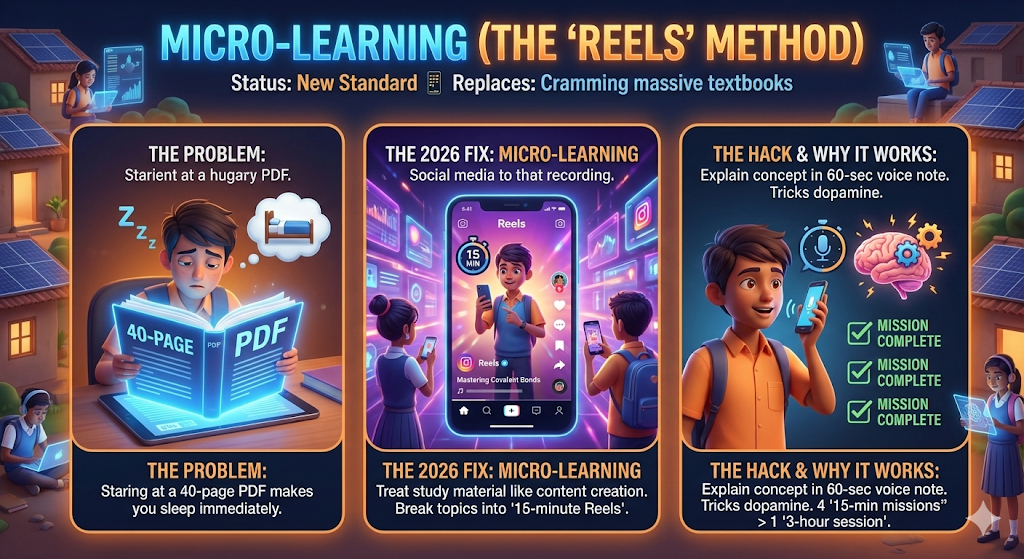
3. Micro-Learning (The “Reels” Method)
Status:New Standard 📱 Replaces:Cramming massive textbooks
The Problem: Staring at a 40-page PDF makes you want to sleep immediately.
The 2026 Fix:Micro-Learning. Treat your study material like content creation.
The Method: Break massive topics into “15-minute Reels.”
How to do it: Don’t study “Chemistry” for 3 hours. Instead, create a 15-minute session called “Mastering Covalent Bonds.”
The Hack: If you can’t explain the concept in a 60-second voice note to yourself, you don’t know it yet.
Why it works: It tricks your dopamine-seeking brain. Completing four “15-minute missions” feels way better than failing to finish one “3-hour study session.”
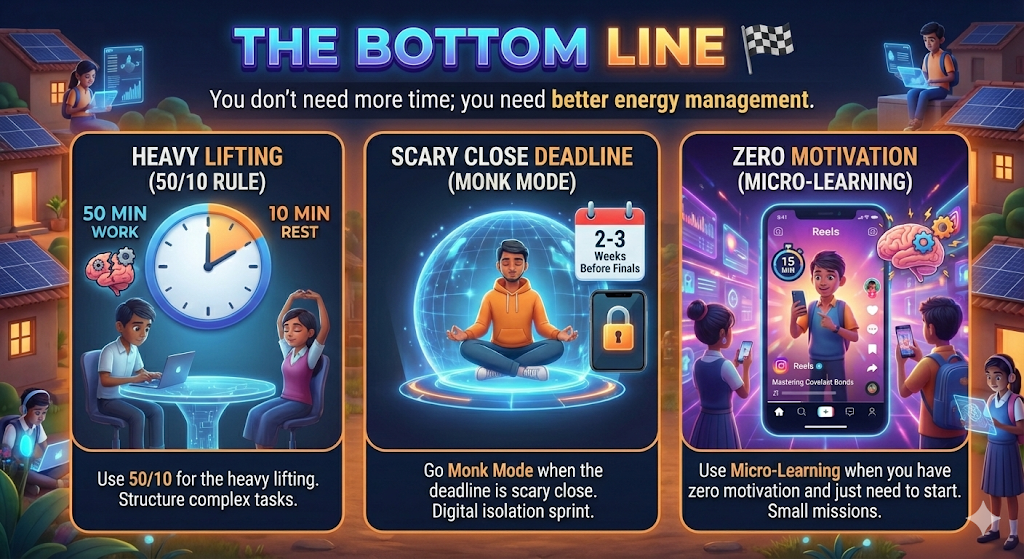
🏁 The Bottom Line
You don’t need more time; you need better energy management.
Use 50/10 for the heavy lifting.
Go Monk Mode when the deadline is scary close.
Use Micro-Learning when you have zero motivation and just need to start.
By prioritizing effective communication between families we can create a supportive environment that promotes the child’s academic success, emotional well-being, and overall development.



 The Life Navigator