
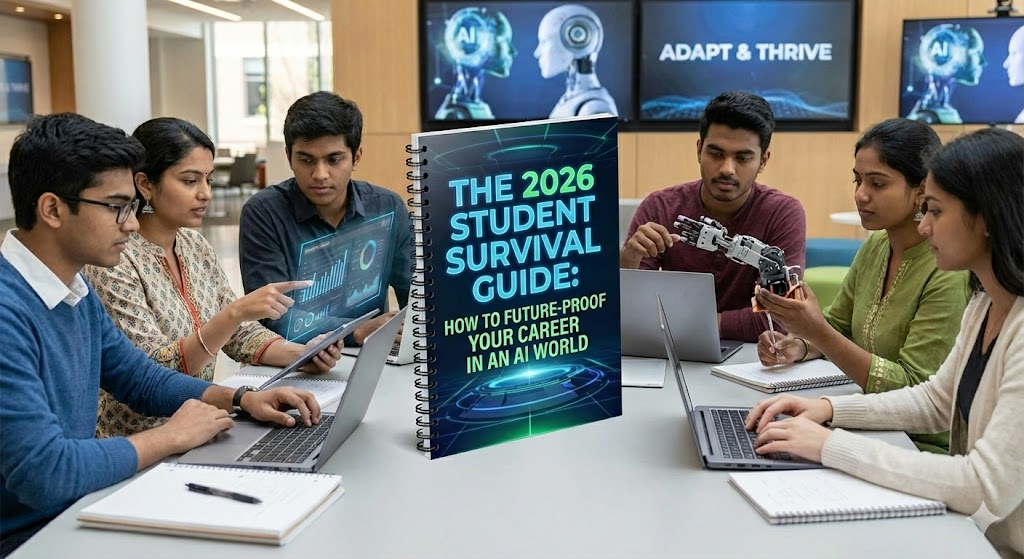
It’s February 2026. Let’s be real for a second: the headlines are scary. “AI is taking entry-level coding jobs,” “Robots are writing marketing copy,” and “Is your degree already obsolete?”
If you’re a student right now, you might feel like you’re studying for a world that won’t exist by the time you graduate. But here is the good news: You don’t need to beat the bots. You just need to be more human than them.
The rules of the game have changed. Here is your roadmap to crushing it in 2026, from acing the new “hybrid” exams to landing the jobs that AI can’t touch.
1. The New Resume Flex: “Power Skills” > Degrees
For decades, the “hard skills” (like coding Java or accounting) were the golden ticket. But in 2026, AI can write code faster than you, and it doesn’t make math errors.
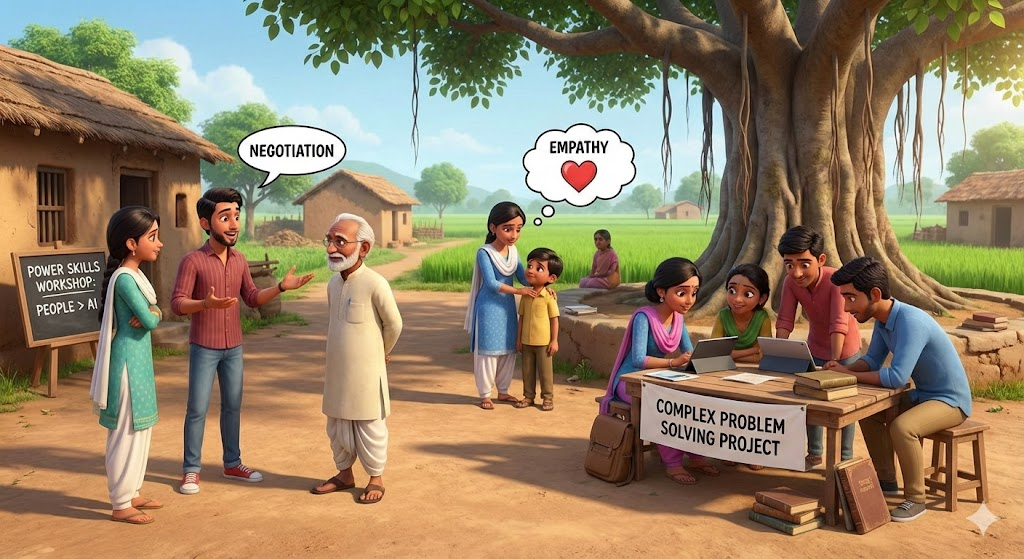
So, what are employers actually desperate for? “Power Skills.” These are the messy, human things that software can’t do:
- Negotiation: convincing a stubborn client (or professor).
- Empathy: understanding why a user is frustrated, not just fixing the bug.
- Complex Problem Solving: connecting dots between totally different subjects (like biology and ethics).
The Takeaway: Don’t just memorize the textbook. Join the debate club, lead a project, or volunteer. Show employers you can handle people, because AI still handles people terribly.
2. The Rise of “Micro-Credentials” (a.k.a. The Speed Run)
Waiting four years for a degree to prove you know something? That is so 2020. Technology moves too fast for traditional universities to keep up.
Enter the “Nano-Degree” or Micro-Credential. Employers in 2026 love “stacked” resumes. Instead of just a B.A. or B.Tech, they want to see:
- A 6-week cert in AI Ethics.
- A weekend workshop in Green Energy Logistics.
- A project portfolio in Prompt Engineering.
The Takeaway: You can learn these online, often for cheap. Treat your education like a playlist—curate the specific tracks (skills) that make you unique.
3. Surviving the 2026 “Digital-Hybrid” Board Exams
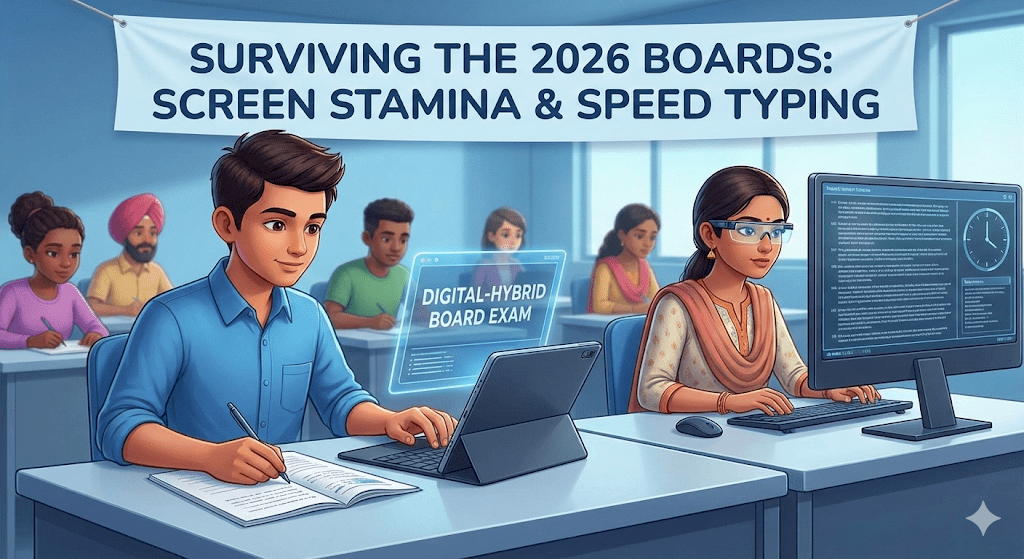
If you are facing the Boards or university finals this year, you are the guinea pigs for the new “Digital-Hybrid” format. No more endless handwriting; now it’s a mix of tablet-based objectives and written theory.
Practical Survival Tips:
- Screen Stamina: Practice reading long passages on a screen without getting distracted. Your eyes need training just like your hands.
- Type vs. Write: Don’t lose your handwriting speed, but get your typing speed up to 40 WPM (Words Per Minute). You don’t want to be hunting for keys when the clock is ticking.
- The “Ctrl+F” Trap: In open-book digital sections, don’t rely on searching for keywords. You need to understand the concepts to answer the tricky application questions.
4. Side Hustles 2.0: Earning Without the Burnout
Forget delivering food or data entry (robots do that now). The “Gig Economy” of 2026 offers smarter, higher-paying ways for students to make cash.
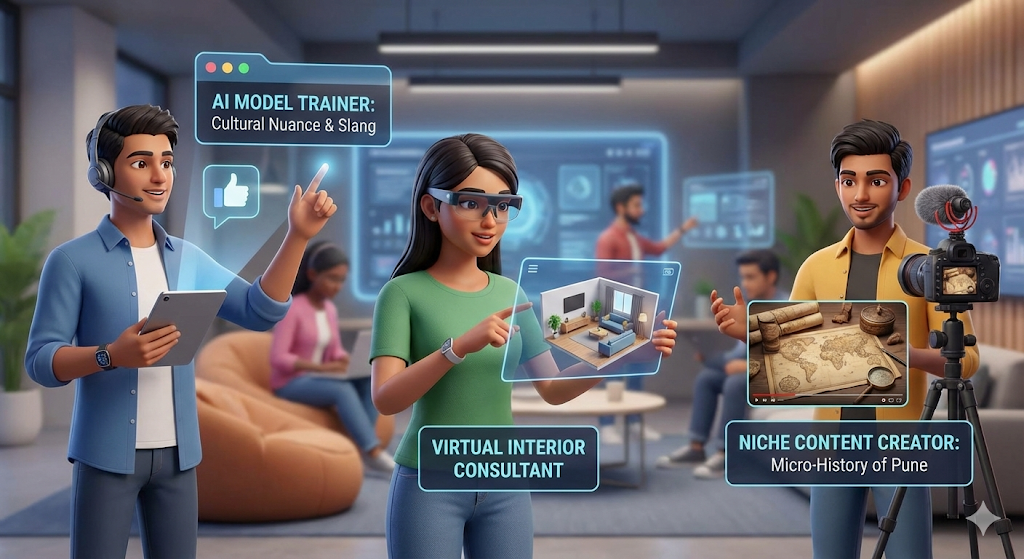
- AI Model Trainer: AI needs humans to teach it nuance. You can get paid to rate AI responses or “teach” it slang and cultural context.
- Virtual Interior Consultant: Use AR (Augmented Reality) tools to redesign rooms for clients remotely.
- Niche Content Creator: Don’t try to be a generic influencer. Be the “Micro-History of Pune” guy or the “Chemistry Hacks” girl. Specificity sells.
The Bottom Line
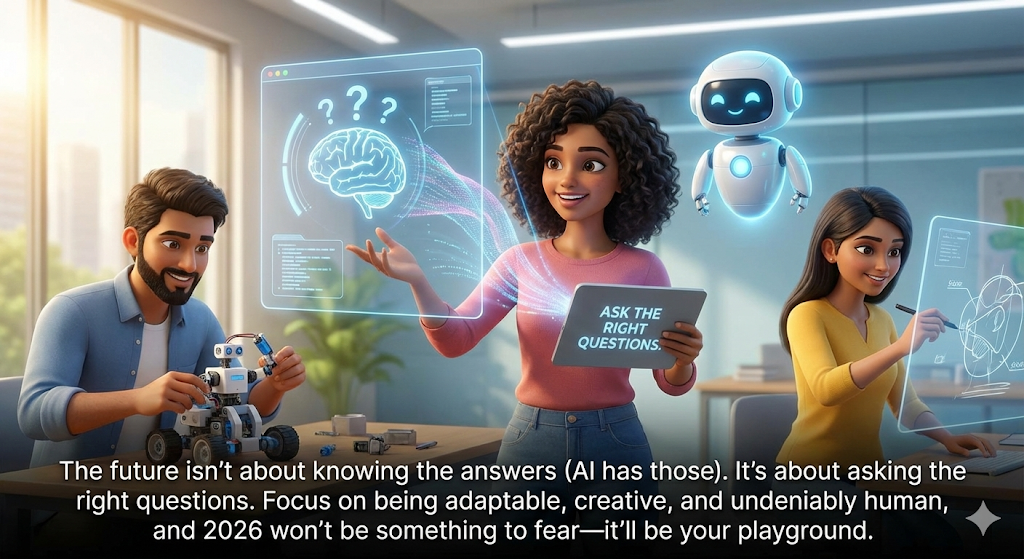
The future isn’t about knowing the answers (AI has those). It’s about asking the right questions. Focus on being adaptable, creative, and undeniably human, and 2026 won’t be something to fear—it’ll be your playground.


 The Life Navigator