
By: [Gemini]
You’re staring at a blank Google Doc. The cursor is blinking like a taunt. You have a 1,500-word analysis on Existentialism due in six hours. You open a new tab.
“Write a thesis statement about Sisyphus and the absurdity of modern capitalism,” you type.
In 4.2 seconds, ChatGPT spits out three paragraphs of grammatically perfect, intellectually “fine” prose. You copy, you paste, you tweak a few words to make it sound more like “you,” and you close your laptop. Mission accomplished, right?
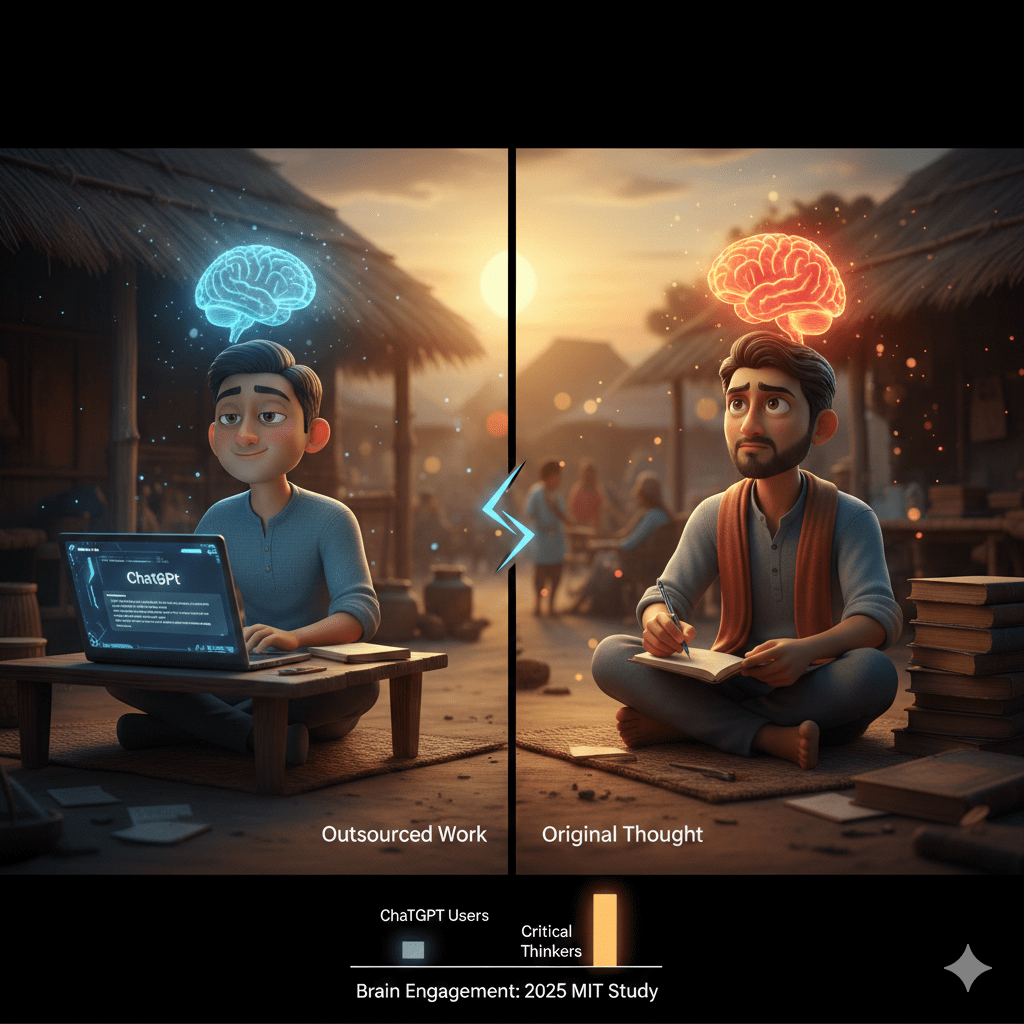
But here’s the unsettling reality: while you were saving time, your brain was literally “turning down the volume.” Recent 2025 studies from MIT’s Media Lab used EEGs to track students’ brain activity during writing. The results? Students using ChatGPT showed the lowest levels of brain engagement in regions linked to memory and creativity.+1
Basically, you didn’t just outsource the work; you outsourced the “you” part of your degree.
1. The “Soulless” Syndrome
Teachers across the country are starting to identify a new phenomenon: the “Soulless Essay.” AI models are trained on the “average” of human thought. They don’t have opinions; they have probability distributions. When you rely on them, your writing becomes an average of everyone else’s ideas. You lose the “grit,” the weird metaphors, and the controversial takes that actually make a piece of writing memorable.
The Risk: If you never struggle to find the right word, you eventually lose the ability to find your own voice. You become a “Prompt Engineer” rather than a “Thinker.”

2. Your Brain on “Airplane Mode”
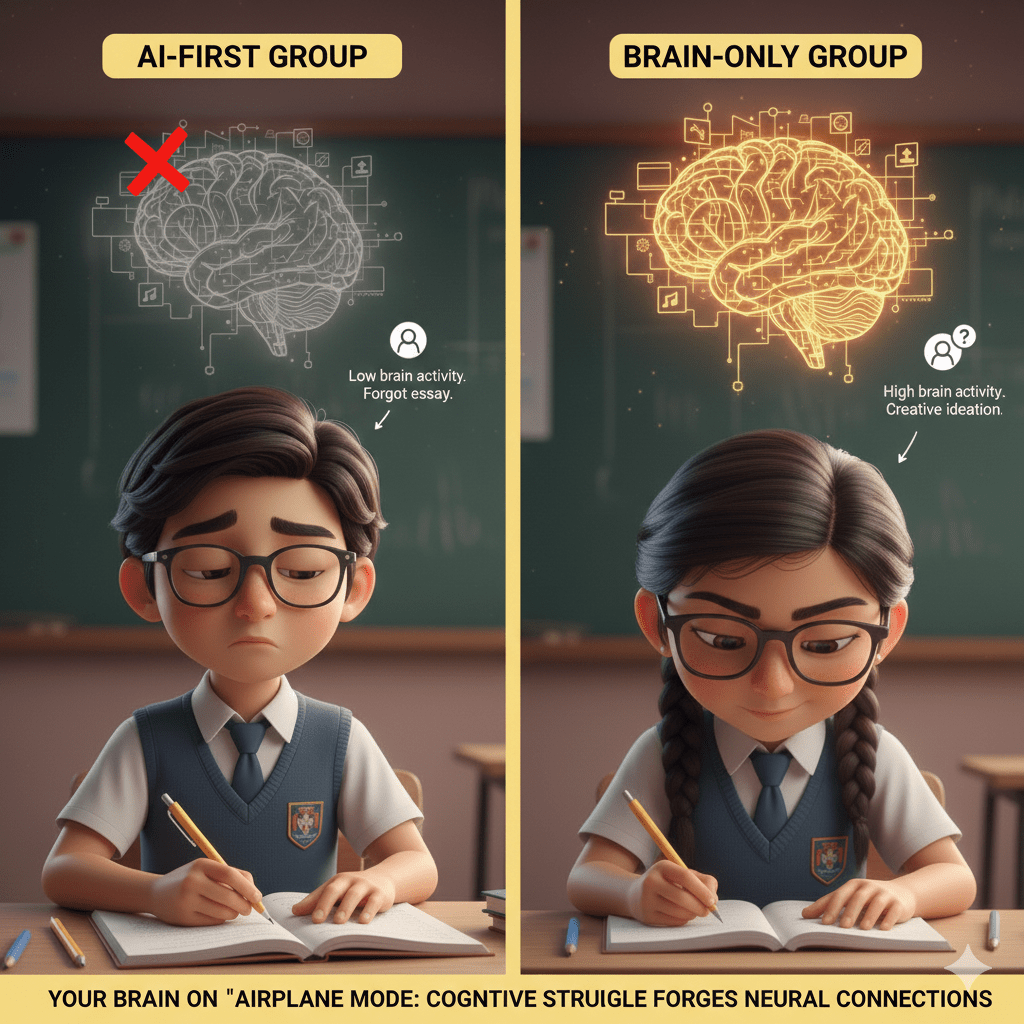
Writing isn’t just a way to record thoughts—it’s a way to create them. When you write, your brain undergoes “cognitive struggle.” This struggle is where neural connections are forged.
- The “Brain-Only” Group: High activity in the alpha and theta bands (associated with creative ideation).
- The “AI-First” Group: 83% of students in the MIT study couldn’t even remember what their own AI-generated essay said ten minutes later.
Think of it like this: Using AI for every essay is like using an electric scooter to run a marathon. You’ll get to the finish line faster, but your legs won’t get any stronger.
3. The “Cyborg” Strategy: How to Use AI Without Losing Your Mind
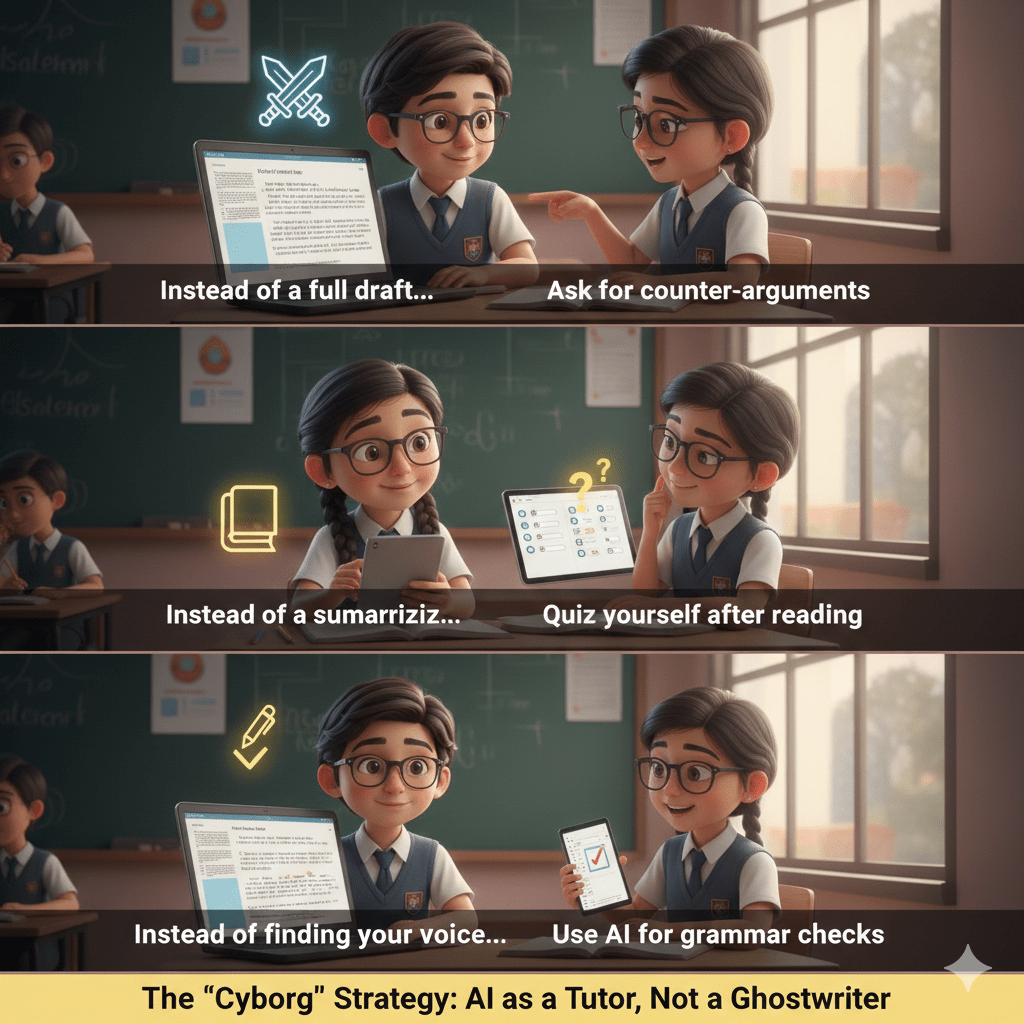
We aren’t going back to the Stone Age. AI is here to stay. The trick isn’t avoiding it—it’s scaffolding it.
| Instead of… | Try this… |
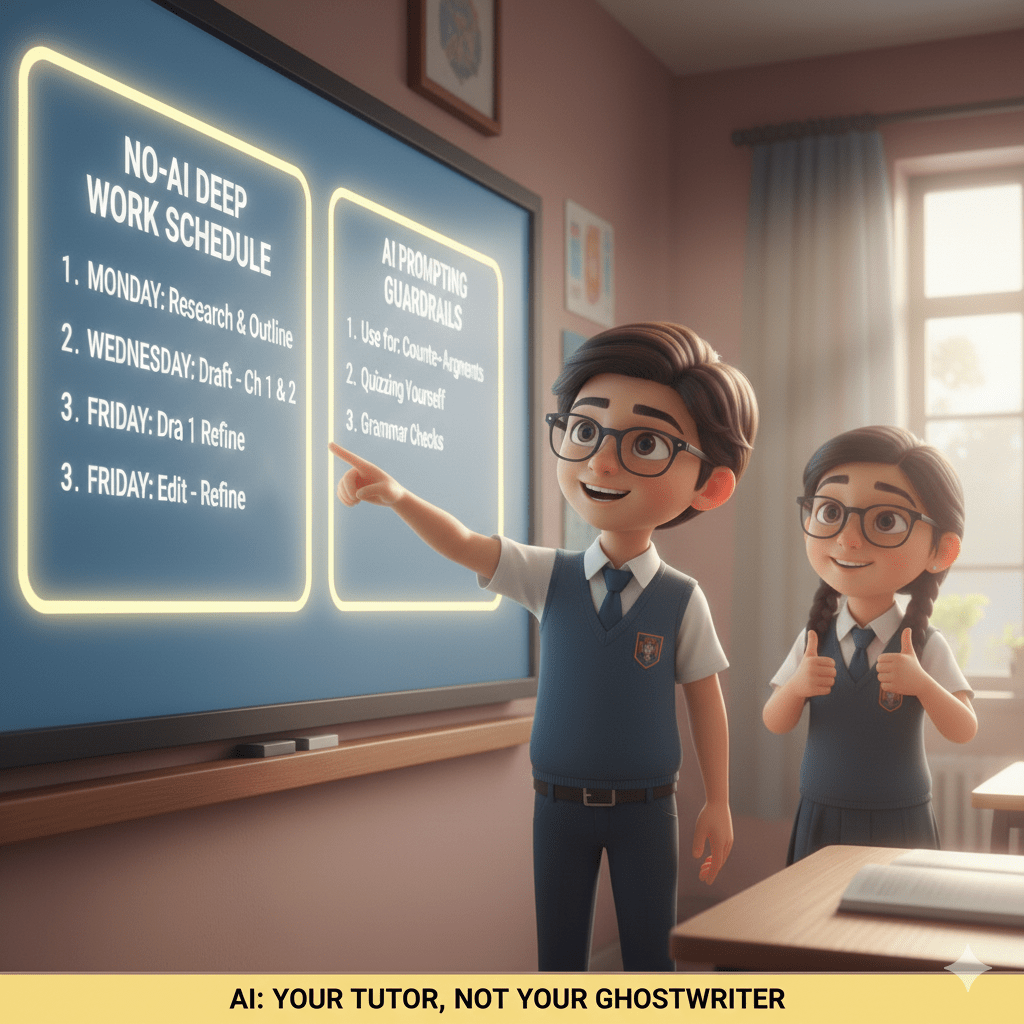
| Asking AI for a full draft. | Asking AI for counter-arguments to your already-written thesis. |
| Using AI to summarize a reading. | Using AI to quiz you on the reading after you’ve finished it. |
| Letting AI find your “voice.” | Using AI to find grammatical errors after you’ve written your “hot take.” |
The Verdict
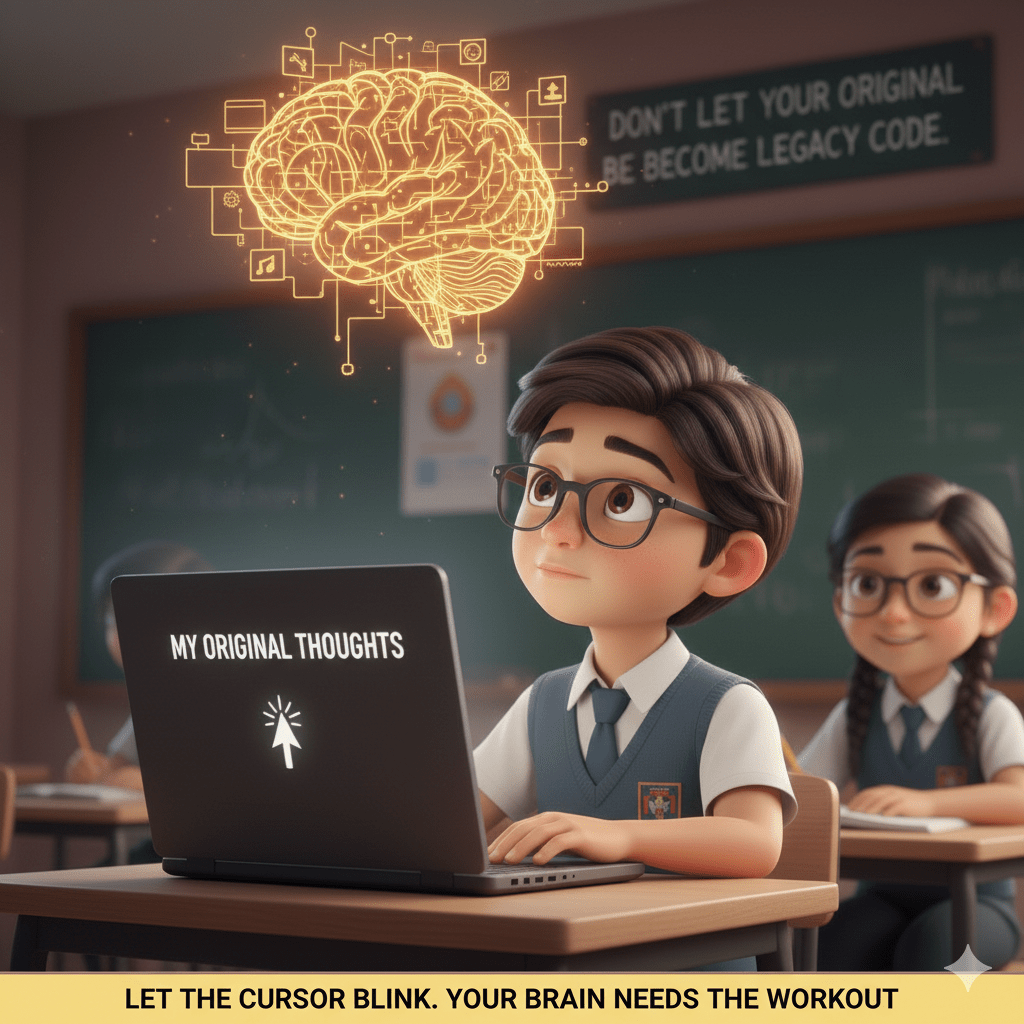
College is likely the last time in your life where your primary job is to expand your capacity to think. If you let a bot do the heavy lifting now, you’re graduating with a degree in “Asking a Machine for Permission to Think.” Don’t let your original thoughts become “Legacy Code.” The world doesn’t need more polished, average prose. It needs your specific, messy, original perspective.
So, next time the cursor blinks? Let it blink for a minute. Your brain needs the workout.
Challenge for the Reader:
“No-AI Deep Work” schedule, or perhaps provide a list of “Prompting Guardrails” to ensure you’re using AI as a tutor rather than a ghostwriter?


 The Life Navigator