
Reduced Quality Time: Parents addicted to their mobile phones may spend less quality time with their children. This can lead to children feeling neglected or unimportant.

Decreased Attention and Responsiveness: Constant use of mobile phones can reduce parents’ attentiveness and responsiveness to their children’s needs, both emotional and physical. This can hinder the child’s development and sense of security.

Modeling Poor Behavior: Children often imitate their parents’ behavior. When parents are frequently on their phones, children may learn to prioritize screen time over face-to-face interactions and develop similar addictive behaviors.
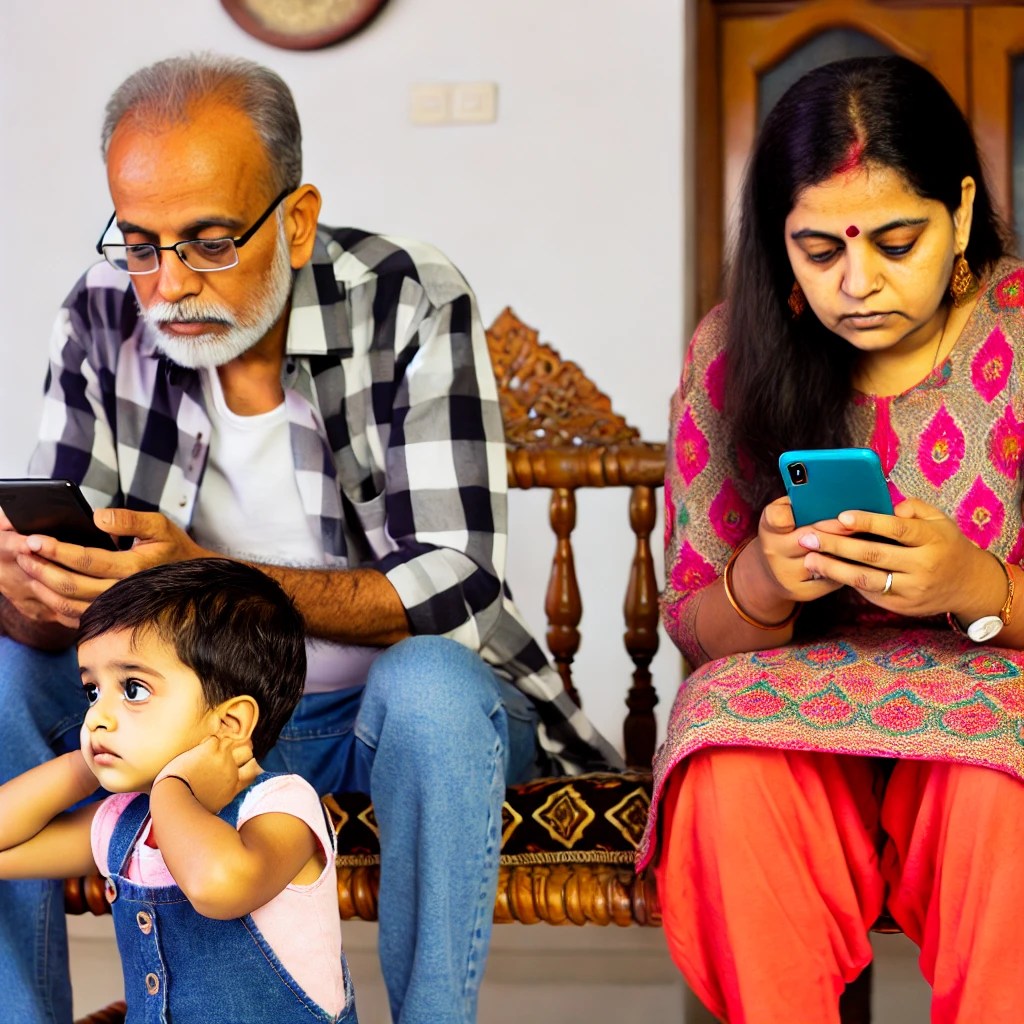
Communication Breakdown: Effective parenting requires open and consistent communication. Mobile phone addiction can create barriers to communication, leading to misunderstandings and a lack of emotional connection.

Safety Concerns: Parents distracted by their phones may not be fully aware of their children’s activities or surroundings, increasing the risk of accidents or dangerous situations.

Impact on Discipline: Consistent and effective discipline is crucial for child development. Parents preoccupied with their phones may be inconsistent or less effective in setting and enforcing rules and boundaries.

Mental Health Impact: Mobile phone addiction can contribute to parental stress, anxiety, and depression, further diminishing their capacity to parent effectively.

Disrupted Family Dynamics: Excessive phone use can disrupt family routines, such as meal times and bedtime, leading to a chaotic home environment that negatively affects children’s well-being.

Emotional Detachment: Overuse of mobile phones can create emotional distance between parents and children, leading to a weakened parent-child bond.

Impaired Problem-Solving Skills: Parents distracted by their phones may struggle to address and resolve issues that arise in their children’s lives, affecting the child’s ability to learn problem-solving skills.



 The Life Navigator