A Shot That Tells a Story
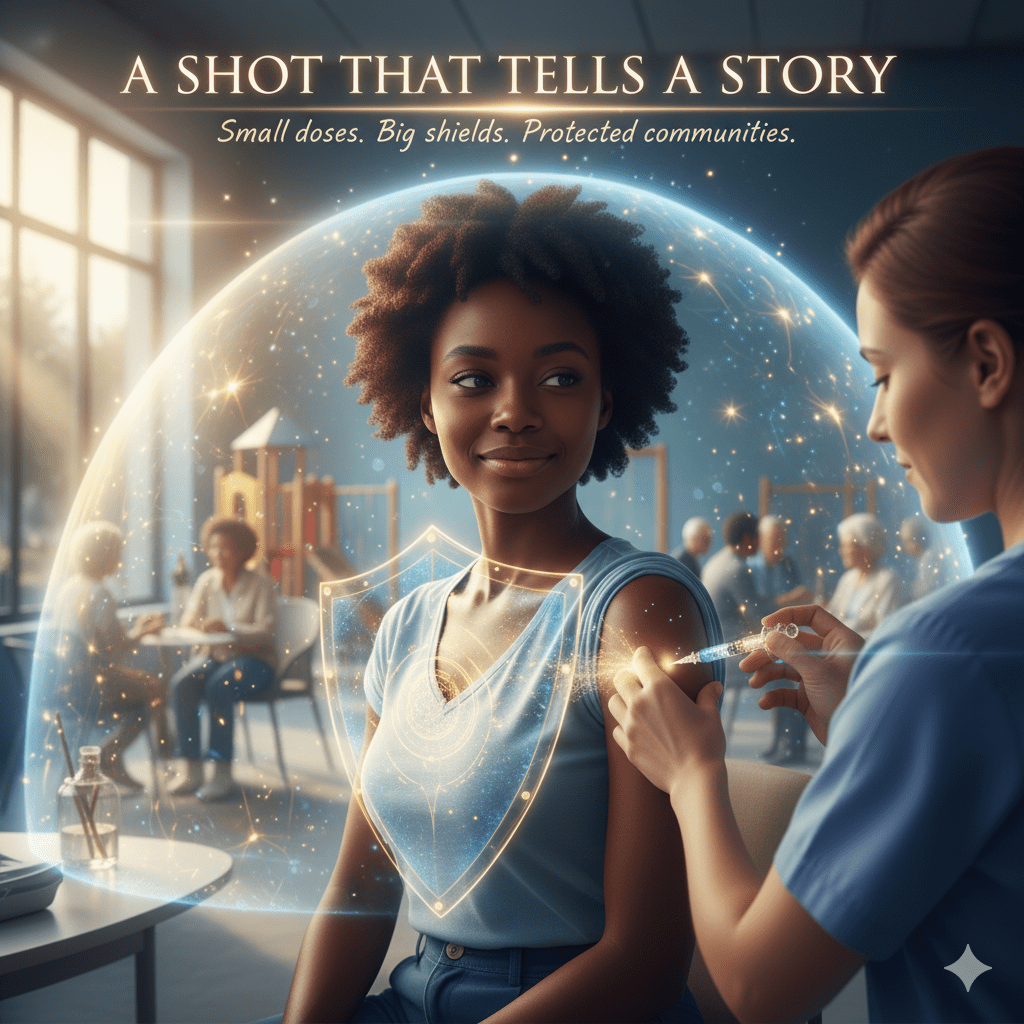
Imagine getting a shot that doesn’t just protect you, but helps shield your entire community. That’s the magic of vaccines — small doses of science that train your body to fight off dangerous diseases without actually getting sick.
Vaccines are one of the most powerful tools humans have ever created. From wiping out smallpox to controlling polio and COVID-19, they’ve saved millions of lives and transformed global health. But how does that tiny jab make such a big difference?
The Body’s Defense Academy
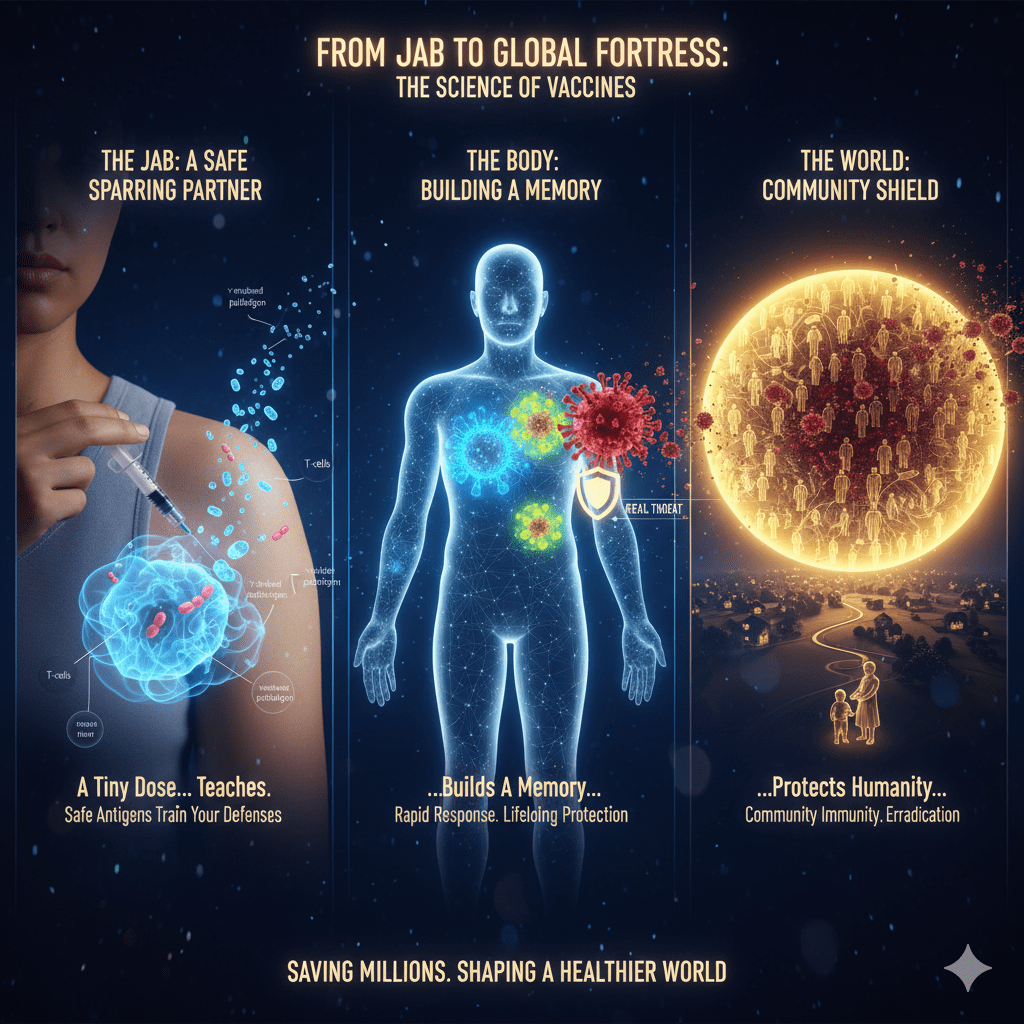
Your immune system is like a high-tech defense academy. When an invader (like a virus or bacteria) enters your body, your immune cells go on red alert. They identify, attack, and — most importantly — remember the invader.
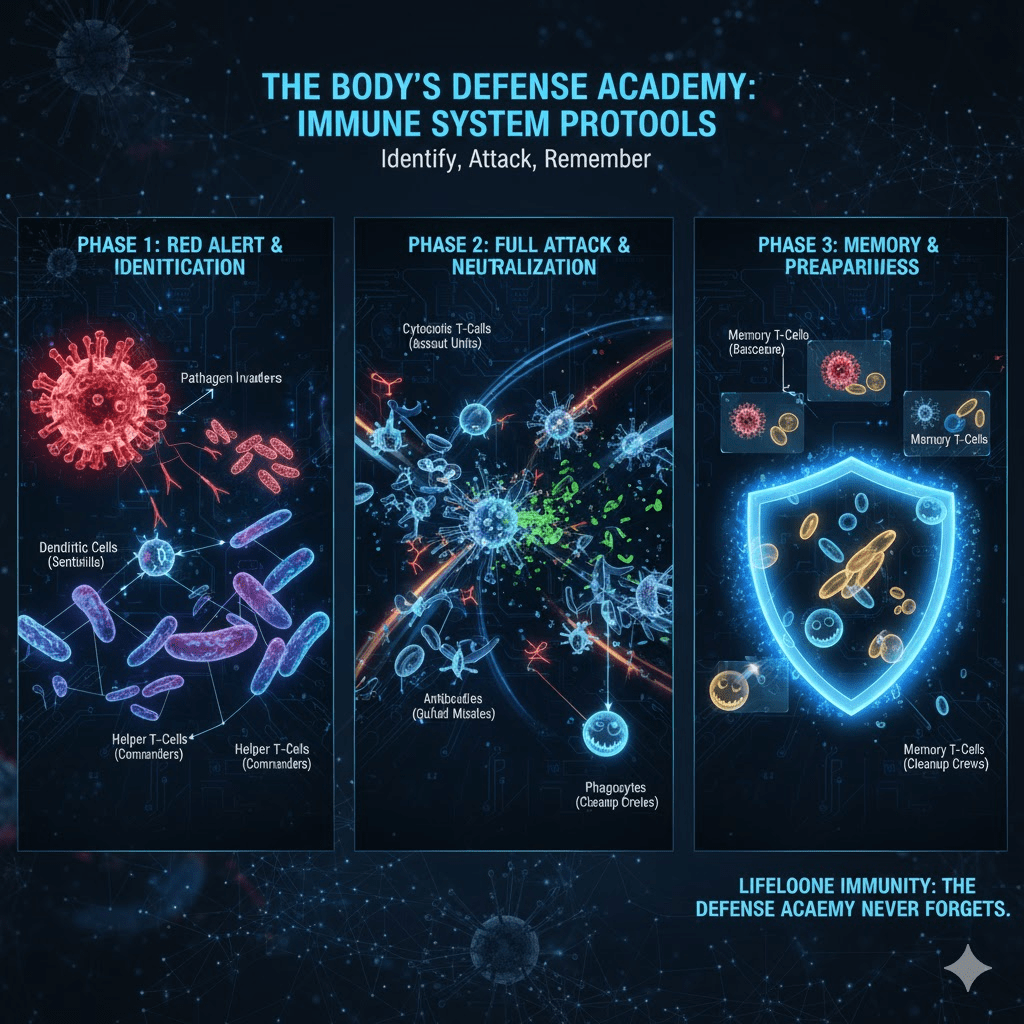
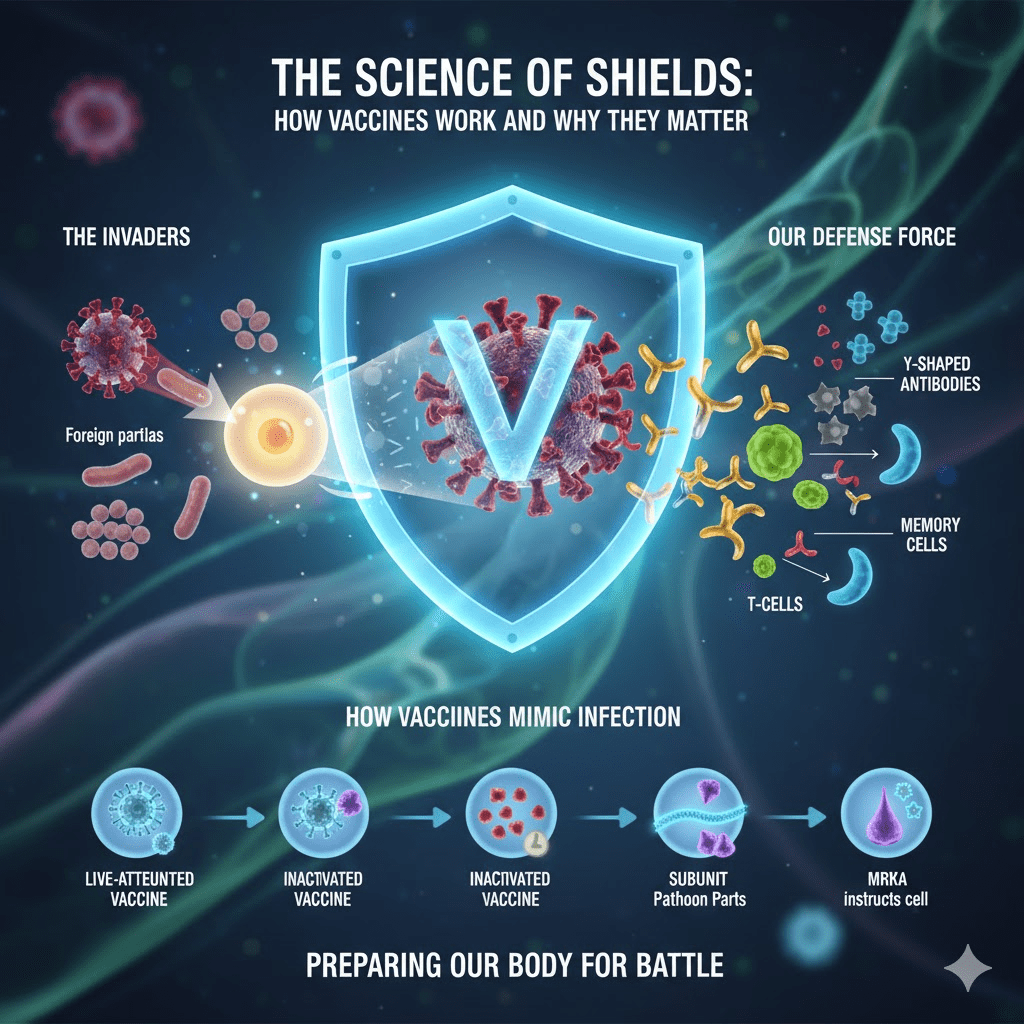
Vaccines use this memory feature to your advantage. Instead of waiting for the real pathogen to strike, a vaccine introduces a harmless version or piece of it — such as:
- Inactivated pathogens (killed viruses/bacteria)
- Weakened pathogens (can’t cause disease but still “look” real)
- Protein subunits (just a piece of the pathogen)
- mRNA instructions (your cells make a harmless piece of the virus themselves — like in COVID-19 vaccines)
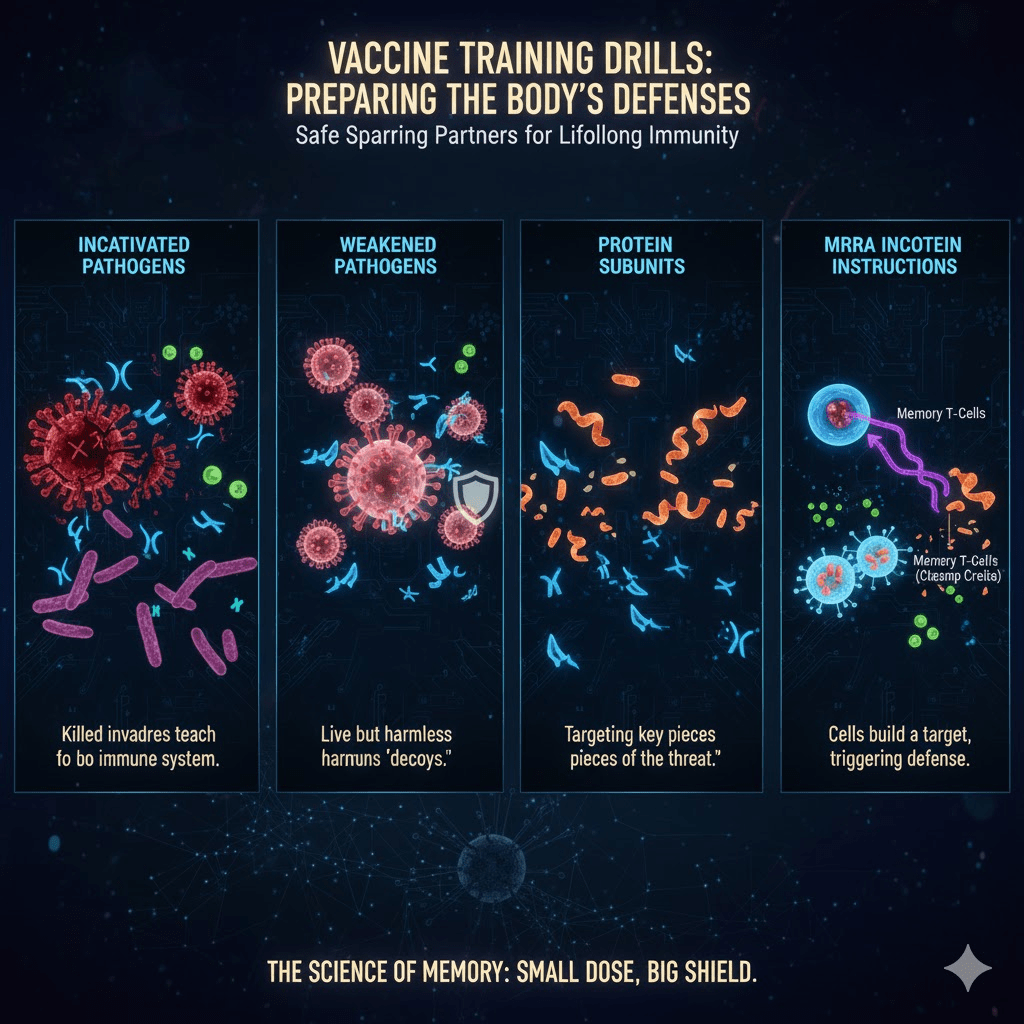
Once your body encounters these mock invaders, it produces antibodies — specialized Y-shaped proteins that recognize and neutralize the real pathogen if it ever shows up. The next time that disease tries to attack, your immune system responds instantly, often before you even feel a symptom.
Herd Immunity: The Science of Community Protection
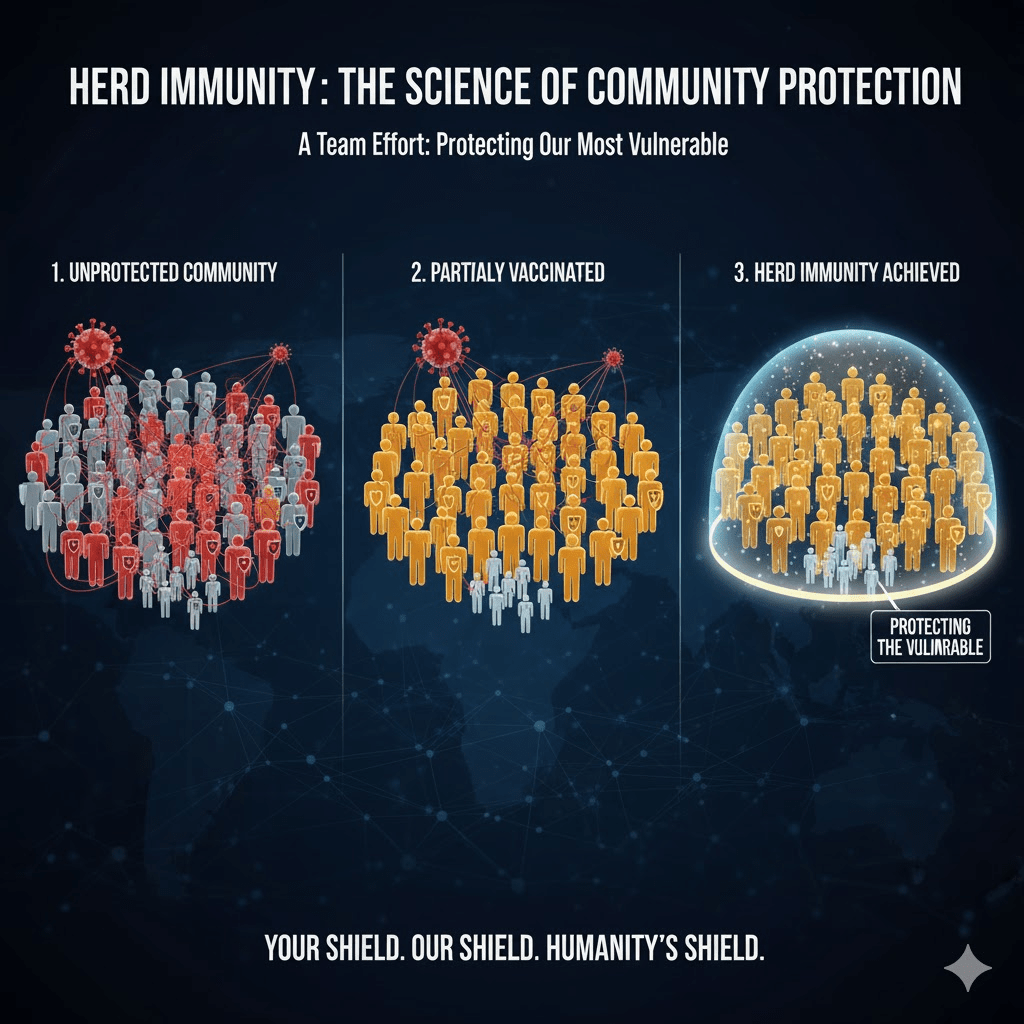
Vaccines aren’t just personal protection — they’re a team effort. When enough people in a population are immune to a disease, it can’t spread easily. This phenomenon is called herd immunity.
Herd immunity protects vulnerable people — like infants, the elderly, or those with weakened immune systems — who can’t be vaccinated themselves. In other words, your vaccination helps protect people you may never even meet.
Why Vaccines Still Matter
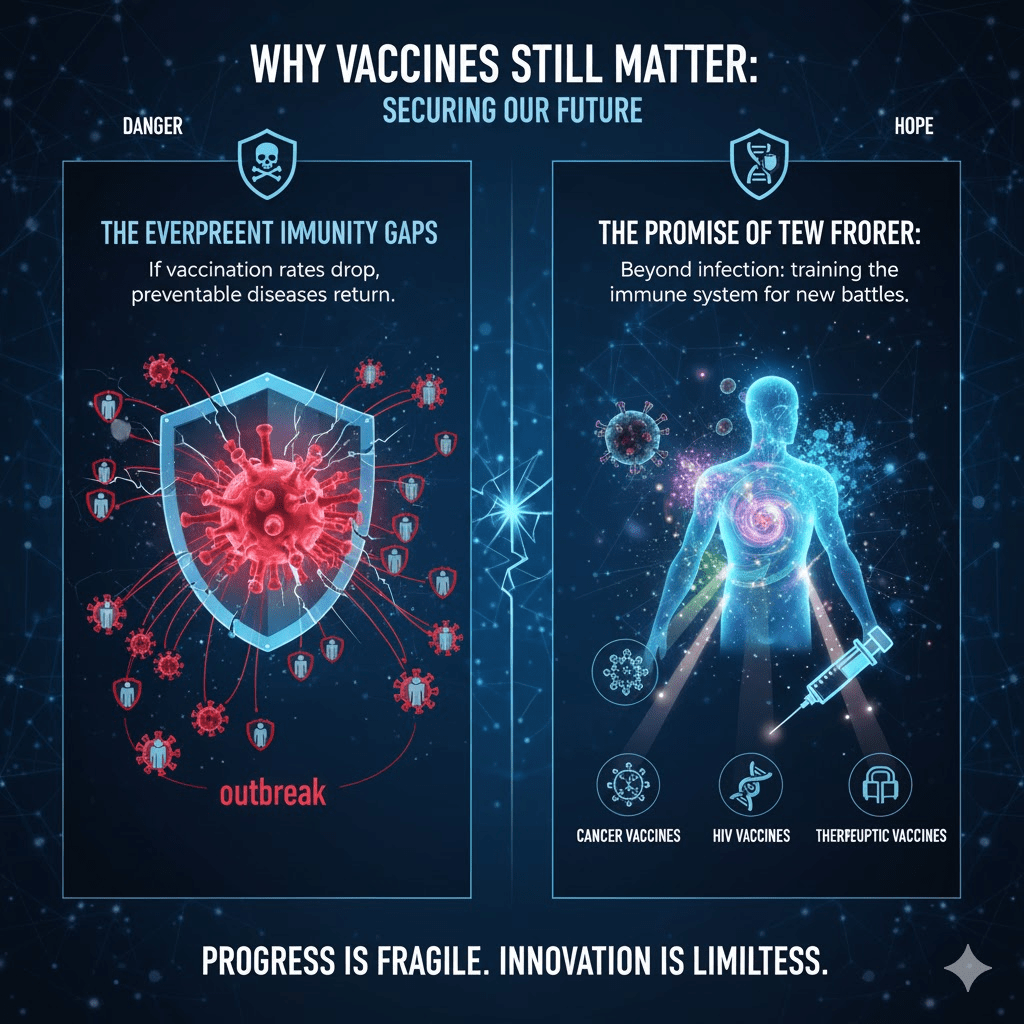
You might think diseases like measles or polio are ancient history. But here’s the catch: if vaccination rates drop, these diseases can come roaring back. Recent outbreaks in some countries prove that immunity gaps can undo decades of progress.
Vaccines also matter beyond infectious diseases — researchers are now exploring cancer vaccines, HIV vaccines, and even therapeutic vaccines that train the immune system to fight chronic illnesses.
Myths, Facts, and Science
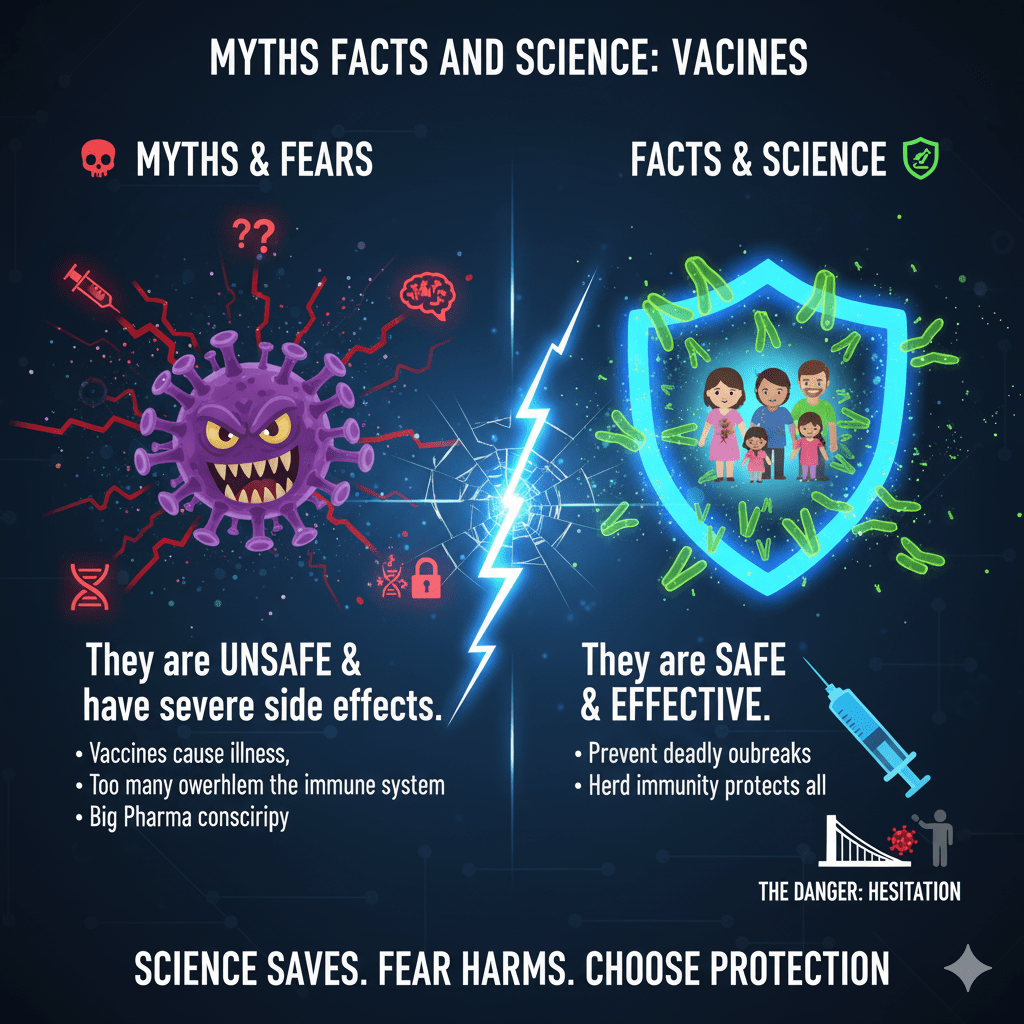
It’s natural to have questions about vaccines, especially with so much information (and misinformation) online. But decades of research confirm one thing: vaccines are overwhelmingly safe and effective.
Serious side effects are extremely rare, while the benefits — preventing deadly outbreaks and long-term complications — are enormous.
The real danger lies not in vaccination, but in hesitation. Every unvaccinated person is a potential bridge for disease transmission.
The Future: Smarter, Faster, Safer
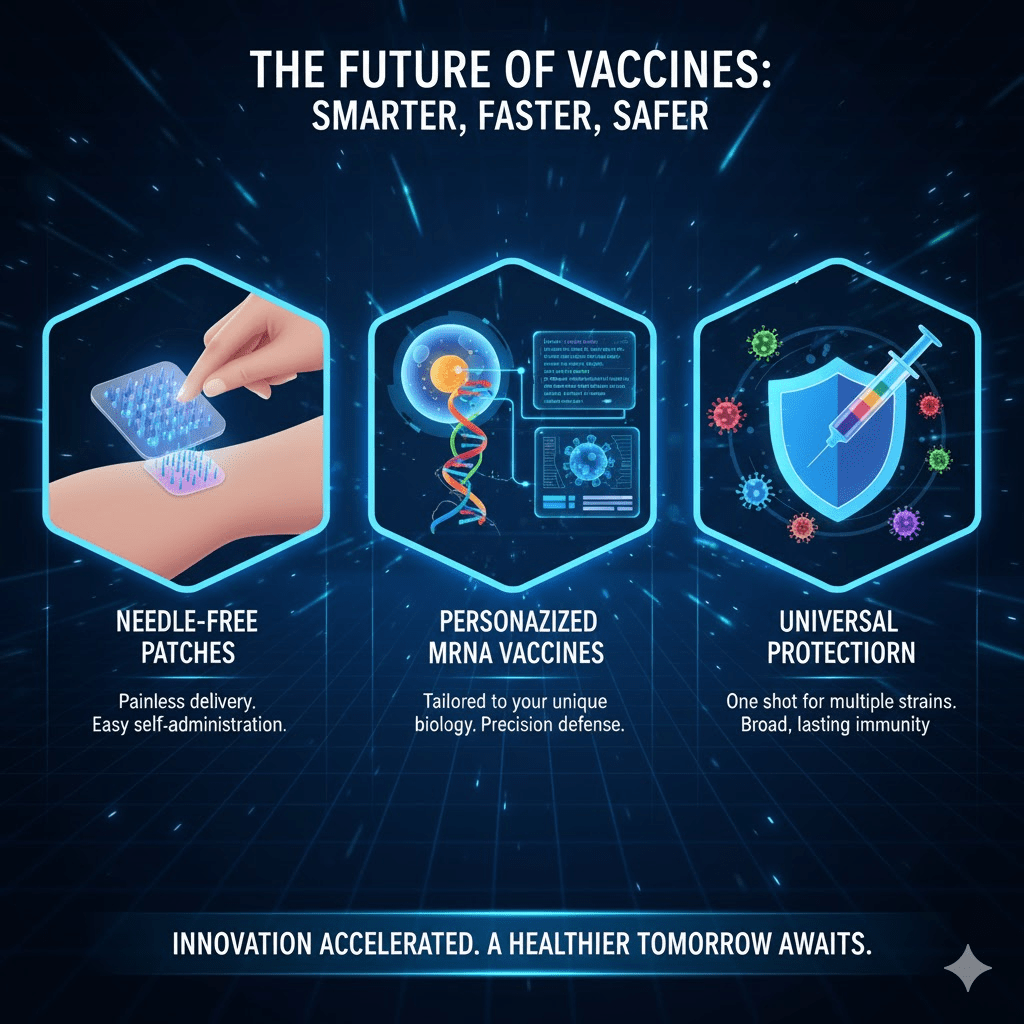
The next generation of vaccines is already here. Scientists are working on needle-free patches, personalized mRNA vaccines, and universal flu shots that could protect against multiple strains. The COVID-19 pandemic, despite its toll, accelerated vaccine innovation in ways the world has never seen.
💡 Final Thought: Science for the Greater Good
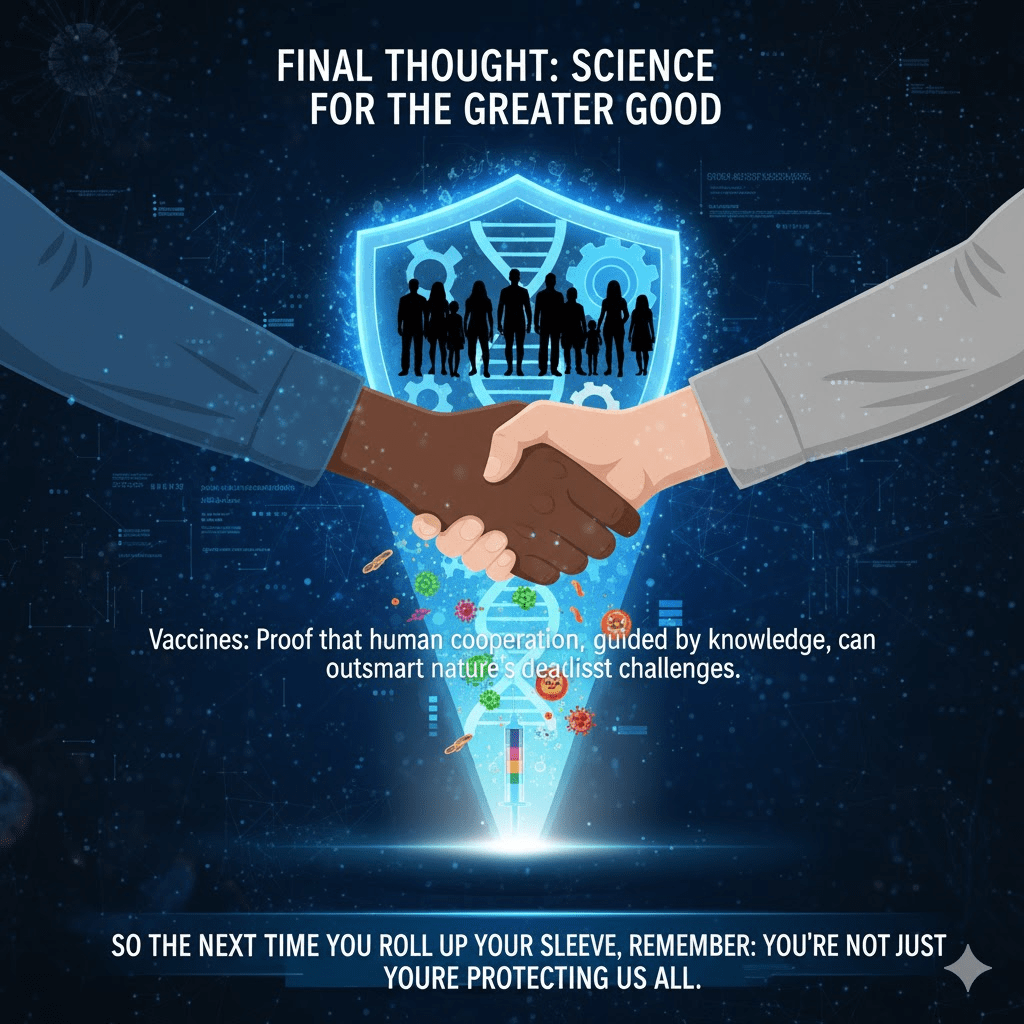
Vaccines remind us that science isn’t just about discovery — it’s about solidarity. They’re proof that human cooperation, guided by knowledge, can outsmart nature’s deadliest challenges.
So the next time you roll up your sleeve for a shot, remember: you’re not just protecting yourself. You’re joining a global chain of protection — one that links you to billions of others in the fight for a healthier world.